TRENDING

Sunday, 13 September 2026
----------------------
2 Rabi' Al-Thani 1448 AH
The recent release of Peru's ex-President Ollanta Humala from prison after a court overturned his money-laundering conviction has sparked questions about the country's ongoing struggle with corruption and the role of powerful actors in shaping its politics. As Humala walks free, the people of Peru are left to wonder what this means for their country's future.
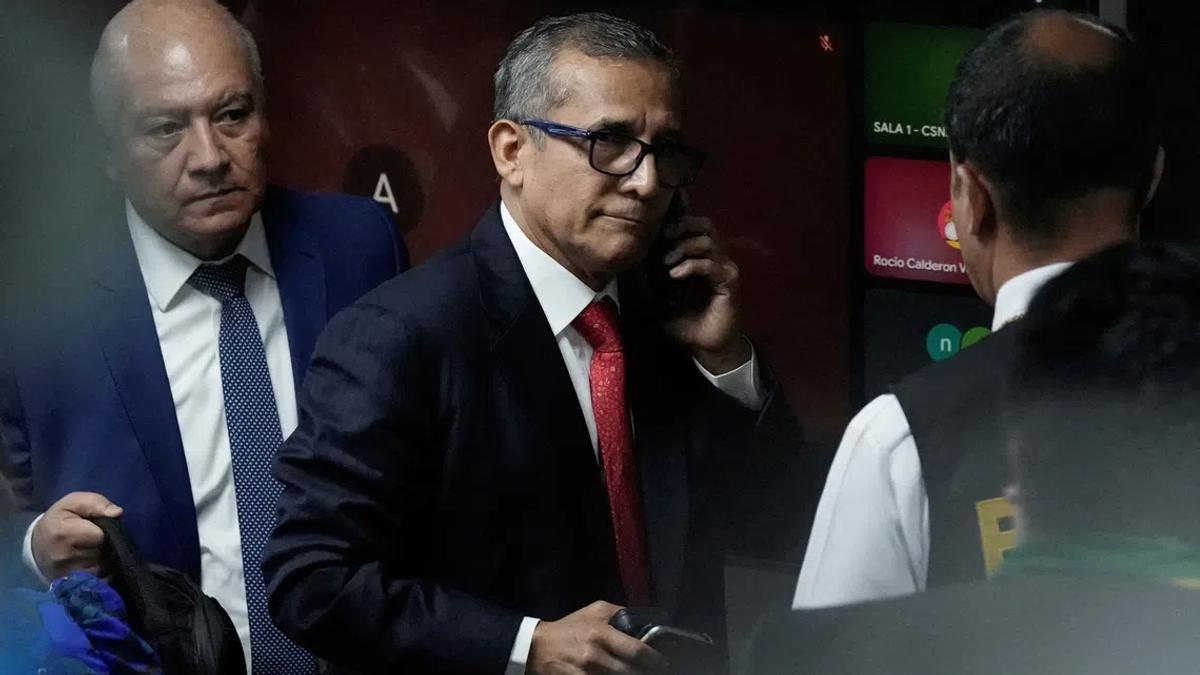
Peruvian ex-President Ollanta Humala was released from prison after the country's Constitutional Court overturned his 15-year money-laundering conviction. The conviction was related to Humala's acceptance of illicit campaign contributions from the Brazilian construction giant Odebrecht during his 2011 presidential campaign.
The power dynamics at play in this case are complex and multifaceted. On one hand, the prosecution's failure to comment on Humala's release suggests a lack of transparency and accountability in the country's justice system. On the other hand, the Constitutional Court's decision to overturn the conviction raises questions about the independence of the judiciary and its relationship with the executive branch. The fact that Humala's wife, Nadine Heredia, was granted asylum in Brazil by President Luiz Inacio Lula da Silva adds an international dimension to the case, highlighting the intricate web of alliances and interests that shape regional politics.
The human cost of this saga is often overlooked in the midst of political maneuvering. The people of Peru, who have been affected by the corruption and instability that have plagued their country for decades, are the real victims. The case against Humala is part of a larger investigation into Odebrecht's operations in Latin America, which has ensnared much of Peru's political establishment. The fact that President Keiko Fujimori, who was recently sworn in, was also investigated over alleged campaign contributions linked to the company, underscores the depth of the corruption problem and the need for meaningful reform.
What is being downplayed in this story is the role of powerful external actors, such as Odebrecht, in shaping Peru's politics. The company's influence extends beyond campaign contributions, and its operations have had a profound impact on the country's economy and infrastructure. Furthermore, the fact that Humala's conviction was overturned on a technicality, rather than on the merits of the case, raises questions about the effectiveness of the country's anti-corruption efforts. The lack of transparency and accountability in the justice system, as well as the cozy relationships between politicians and corporate interests, are all factors that contribute to the perpetuation of corruption.
As Peru moves forward, there are several key developments to watch. The new administration of President Keiko Fujimori will face significant challenges in addressing the country's corruption problem, including the need to reform the justice system and increase transparency. Additionally, the role of external actors, such as Odebrecht, will continue to shape the country's politics and economy. The people of Peru will be watching closely to see if their leaders will take meaningful action to address the corruption and instability that have plagued their country for so long.
Editor's Note: The analysis is based on publicly available information and may not reflect the full complexity of the situation.
Source referenced: STRAITSTIMES
This brief was synthesized by our Editorial Engine and reviewed by The Ground Narrative team.


