TRENDING

Friday, 11 September 2026
----------------------
29 Rabi' Al-Awwal 1448 AH
The 250th anniversary of U.S. independence has ignited a battle over the Monroe Doctrine's true meaning, pitting a nationalist 'America First' view against a hemispheric vision of shared identity. This debate reveals how historical narratives are weaponized to justify power, with real consequences for the Americas.
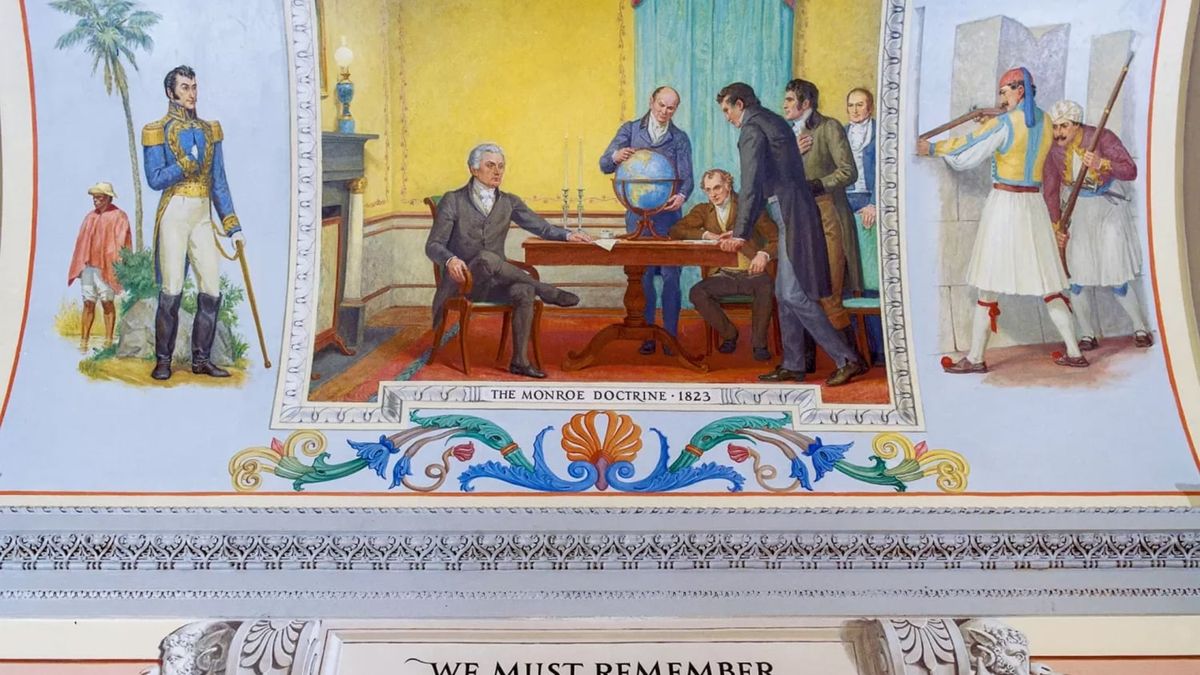
The upcoming 250th anniversary of U.S. independence has ignited a significant debate over the very definition of "American identity" and, crucially, the historical meaning of the Monroe Doctrine. While the current U.S. administration champions a state-centric, nationalist interpretation, popular discourse and recent scholarship are increasingly advocating for a broader, hemispheric understanding that emphasizes shared cultures, diasporas, and a common anti-colonial heritage across the Americas. This clash of narratives centers on whether the Monroe Doctrine was originally a declaration of U.S. dominance or a call for mutual defense among newly independent American states against European powers.
The power at play here is the power of historical narrative itself, wielded to justify contemporary political agendas. The current U.S. administration's "America First" approach seeks to legitimize its unilateral foreign policy by selectively invoking a distorted version of the Monroe Doctrine. This interpretation frames the doctrine as a historical precedent for U.S. hegemony over the Western Hemisphere, protecting it from external influence, be it "communism, fascism, and foreign infringement." This narrative conveniently overlooks the doctrine's original context: a post-colonial declaration aimed at preventing European recolonization and recognizing the sovereignty of nascent American republics. By claiming historical continuity, powerful actors attempt to obscure the significant shift from a principle of mutual defense to one of U.S. interventionism that characterized later corollaries and actions. The pushback from academics and cultural figures, like Bad Bunny, represents a counter-power attempting to reclaim and reframe this historical understanding, highlighting the enduring bonds and shared experiences that transcend national borders within the Americas.
The human cost of this historical revisionism is borne most heavily by the nations and peoples of Latin America. For nearly two centuries, the imperial interpretations of the Monroe Doctrine have served as a pretext for U.S. military interventions, economic exploitation, and political interference across the hemisphere. From supporting coups to imposing economic policies, these actions have undermined national sovereignty, stifled democratic development, and perpetuated cycles of instability and dependence. When the Monroe Doctrine is presented as a mandate for U.S. leadership rather than hemispheric solidarity, it erases the agency and self-determination of millions. Furthermore, a narrow, state-centered definition of "American" identity dismisses the rich tapestry of shared cultures, languages, and diasporic connections that bind the Americas, diminishing the experiences of those whose heritage spans multiple nations within the continent.
What powerful actors consistently downplay or omit is the foundational spirit of the original Monroe Doctrine and the broader "age of revolutions" that shaped the Americas. President Monroe's 1823 address was not primarily a declaration of U.S. superiority, but rather a statement of mutual defense against a resurgent European colonialism, explicitly recognizing the "free and independent condition" of other American states. It was a product of a period marked by widespread hemispheric discourses of solidarity, where thinkers and revolutionaries from Mexico to Peru envisioned shared political destinies and even universal citizenship for all Americans. This rich history of inter-American revolutionary thought and cooperation, which saw American minds leading political innovation, is often sidelined in favor of a simplified narrative that positions the U.S. as the sole architect and guardian of the hemisphere. This omission allows for the convenient justification of past and future unilateral actions, sidestepping the complex, often fraught, history of U.S. relations with its southern neighbors.
As the debate over the Monroe Doctrine's legacy intensifies, observers should watch for several key developments. Firstly, how will Latin American nations respond to any renewed attempts by the U.S. to assert a unilateral interpretation of the doctrine? Will there be increased regional coordination to articulate a collective vision for hemispheric relations that prioritizes sovereignty and equality? Secondly, the influence of cultural movements and academic scholarship will be crucial in shaping public opinion, both within the U.S. and across the Americas. The ability of these voices to challenge dominant narratives could foster a more nuanced understanding of shared history and identity. Finally, the broader geopolitical landscape, particularly the growing influence of non-hemispheric powers in Latin America, will test the practical application of any Monroe Doctrine interpretation. The question remains whether the U.S. will choose to engage with the Americas as a partner in a truly interdependent hemisphere or revert to a historical pattern of asserting dominance, with profound implications for peace and prosperity across the continent.
Source referenced: FOREIGNPOLICY
This brief was synthesized by our Editorial Engine and reviewed by The Ground Narrative team.


