TRENDING

Saturday, 19 September 2026
----------------------
8 Rabi' Al-Thani 1448 AH
A tight Democratic primary in Michigan reveals a deep ideological rift within the party, challenging establishment norms and traditional foreign policy stances. Voters are demanding a reckoning on economic populism and US support for Israel, setting the stage for a critical general election.
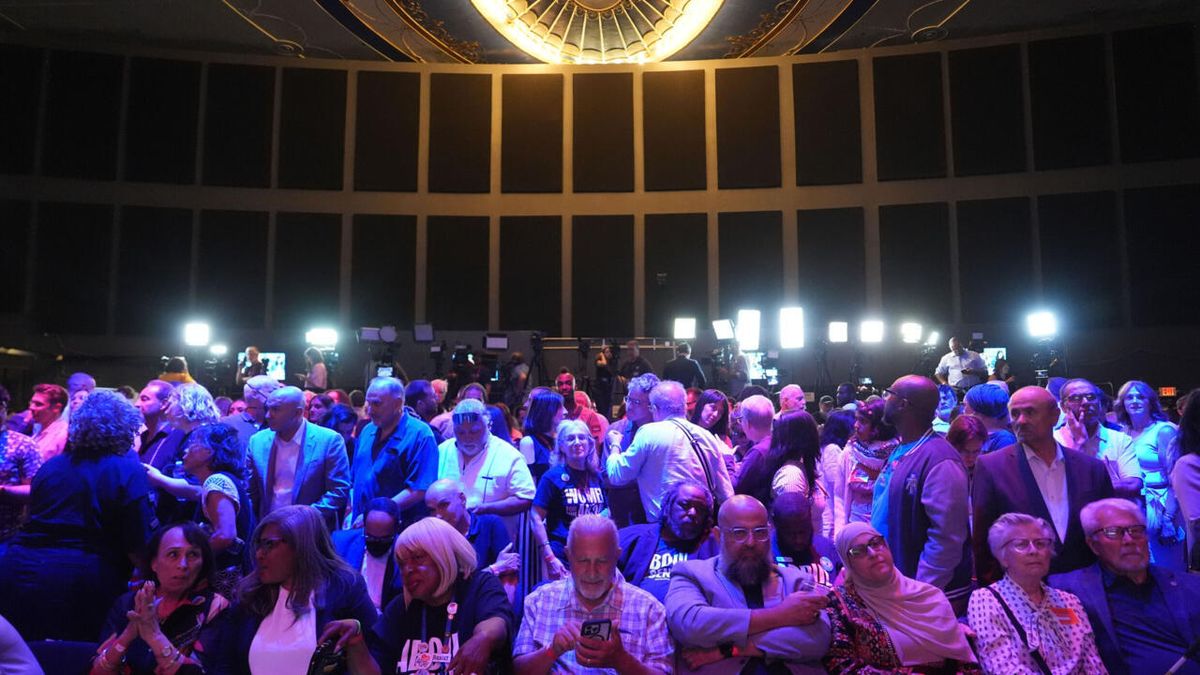
In Michigan's Democratic US Senate primary, a tight contest unfolded between US Representative Haley Stevens, backed by the party establishment and pro-Israel groups, and progressive challenger Abdul El-Sayed. As votes were tallied, El-Sayed held a narrow lead, signaling a significant test for the Democratic Party's internal dynamics and future direction. The winner will advance to face Republican Mike Rogers in a critical November election that could determine control of the US Senate.
This primary is a microcosm of a larger ideological struggle within the Democratic Party, pitting an entrenched establishment against a burgeoning progressive wing. On one side, Stevens represents the traditional Democratic alignment, benefiting from significant financial backing from pro-Israel political action committees and endorsements from party leaders. This support underscores the enduring influence of long-standing alliances and donor networks within the party's power structure. On the other, El-Sayed’s campaign taps into a growing sentiment for economic populism, anti-establishment politics, and a re-evaluation of US foreign policy, particularly concerning Israel. The power here is not just about votes, but about the battle for the party’s ideological soul and its funding streams. Michigan, a crucial swing state with one of the largest Arab-American communities, amplifies these dynamics, making it a battleground where national party leadership and powerful lobbying interests clash directly with a mobilized, often disaffected, segment of the electorate. The outcome reflects a direct challenge to the party's traditional gatekeepers and their ability to dictate policy and candidate selection.
The human cost of this internal party struggle is borne most acutely by the communities whose concerns are often sidelined in Washington's corridors of power. In Michigan, the significant Arab-American population has felt the direct impact of US foreign policy, particularly regarding conflicts in Gaza and Lebanon. Their votes are not just about domestic issues but a profound statement on international solidarity and a demand for accountability from their representatives. This demographic, traditionally a Democratic stronghold, is now openly considering withholding support or actively punishing candidates perceived as complicit in policies they view as harmful. Beyond foreign policy, ordinary citizens across Michigan are grappling with soaring costs of living – groceries, gas, rent, and healthcare. For these voters, the primary is less about abstract ideological battles and more about which candidate genuinely understands and prioritizes their daily economic struggles. They are the people whose voices are often aggregated into polling data but rarely given a direct seat at the decision-making table.
What powerful actors are downplaying or omitting is the profound internal schism within the Democratic Party, often masked by calls for "unity" ahead of general elections. The narrative frequently frames progressive challenges as fringe movements, rather than a significant and growing segment of the party's base demanding a fundamental shift in priorities. The immense financial leverage of specific lobbying groups, particularly pro-Israel PACs, in shaping primary outcomes is rarely discussed openly by party leadership, despite its clear impact on candidate viability and policy positions. The defeat of progressive figures like Cori Bush, heavily targeted by such spending, highlights how money can effectively silence dissenting voices within the party. Furthermore, the establishment often avoids making explicit the direct correlation between US foreign policy decisions and their tangible impact on domestic voter sentiment, especially in diverse communities. They prefer to compartmentalize these issues, rather than acknowledge how international actions can directly erode trust and reshape electoral landscapes at home.
The Michigan primary's outcome will send a powerful signal, reverberating far beyond the state's borders. Observers should watch closely how the Democratic Party attempts to coalesce around its nominee, particularly if El-Sayed, the progressive challenger, secures the win. This will test the party's ability to bridge its internal divides and mobilize all segments of its base for the general election. The general election itself will be a crucial indicator: will disaffected progressive and Arab-American voters, feeling heard in the primary, turn out in force, or will lingering resentments lead to apathy? Beyond Michigan, the results will be scrutinized by prospective 2028 presidential contenders, forcing them to re-evaluate their messaging on economic populism and, critically, their stance on US support for Israel. The ongoing influence of big money in primaries, and whether it continues to overpower grassroots movements, remains a central theme to monitor across future election cycles.
Source referenced: FRANCE24
This brief was synthesized by our Editorial Engine and reviewed by The Ground Narrative team.


