TRENDING

Saturday, 19 September 2026
----------------------
8 Rabi' Al-Thani 1448 AH
Mazu, the Goddess of the Sea, has been a revered figure across coastal communities in the South China Sea for over a thousand years. Her cultural significance extends beyond religious devotion, reflecting the complex history and power dynamics of the region. As tensions rise in the South China Sea, understanding the cultural context of Mazu can provide insights into the motivations and actions of regional actors.
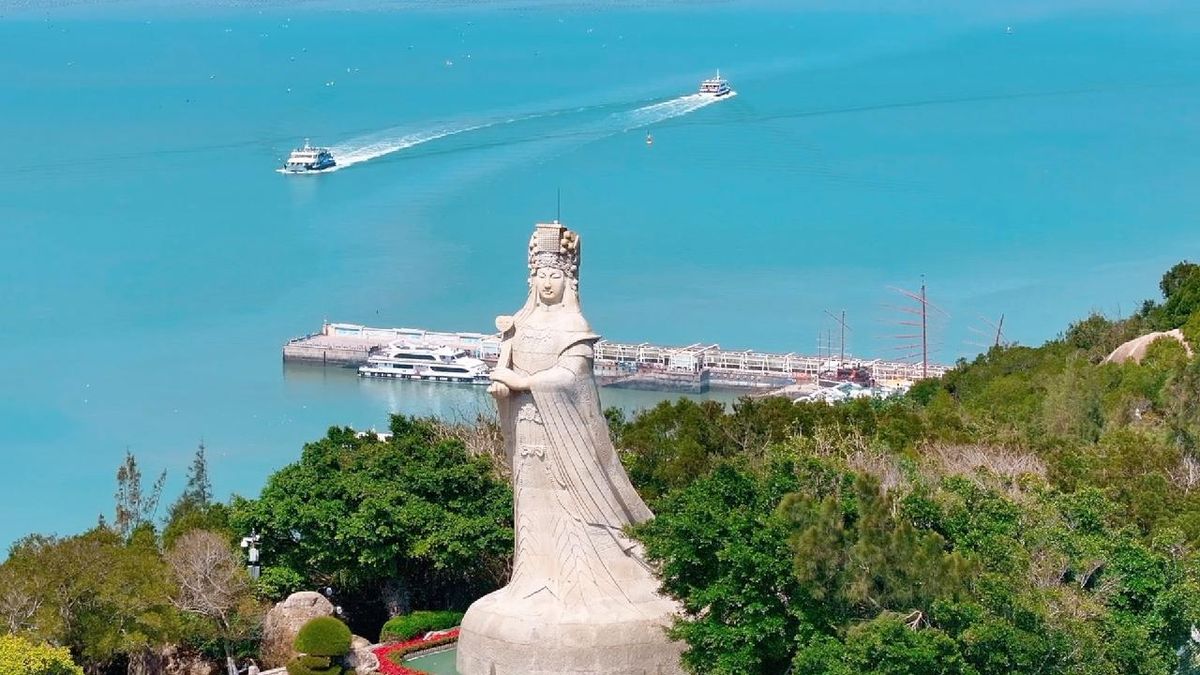
The story of Mazu, the Goddess of the Sea, is one of shared cultural heritage across the South China Sea. For over a thousand years, Mazu has been revered by coastal communities whose lives have been intertwined with the ocean. Her influence extends from China to Southeast Asia, with temples, traditions, and everyday life reflecting her significance. This shared cultural symbol has the potential to bridge the gaps between nations, fostering cooperation and understanding in a region often marked by tension.
However, the significance of Mazu also reflects the power mechanics at play in the South China Sea. The spread of Mazu culture along ancient maritime trade routes underscores the historical connections between China and Southeast Asia. Today, as China asserts its claims in the South China Sea, the cultural significance of Mazu can be seen as a tool for soft power, promoting Chinese influence and legitimacy in the region. Other regional actors, including Taiwan and Southeast Asian nations, also lay claim to Mazu's cultural heritage, highlighting the complex web of power dynamics at play.
The people who live and work in the South China Sea are often overlooked in discussions of geopolitical tensions. Fishermen, traders, and coastal communities are affected by the rising tensions, as their livelihoods and ways of life are threatened by the increasing militarization of the region. The cultural significance of Mazu serves as a reminder of the shared human experiences and traditions that transcend national boundaries. As the situation in the South China Sea continues to evolve, it is essential to consider the human cost of geopolitical tensions and the impact on the people who call the region home.
While the cultural significance of Mazu is often highlighted, there is another story that is less frequently told. The use of Mazu as a cultural symbol can also be seen as a means of downplaying the complexities of the South China Sea dispute. By focusing on shared cultural heritage, regional actors can distract from the underlying issues of sovereignty, resource management, and military expansion. Furthermore, the promotion of Mazu's cultural significance can be used to legitimize claims of historical presence and influence in the region, potentially obscuring the experiences and perspectives of other regional actors.
As the situation in the South China Sea continues to unfold, it is essential to watch for how the cultural significance of Mazu is used by regional actors. Will Mazu's shared cultural heritage be leveraged as a tool for cooperation and dialogue, or will it be used to further entrench national interests and claims? The answer to this question will depend on the actions of regional actors, including China, Taiwan, and Southeast Asian nations. As the international community looks on, it is crucial to consider the human cost of geopolitical tensions and the impact on the people who call the South China Sea home.
Editor's Note: The analysis of the cultural significance of Mazu is based on publicly available information and may not reflect the full complexity of the issue.
Source referenced: CGTN
This brief was synthesized by our Editorial Engine and reviewed by The Ground Narrative team.