TRENDING

Tuesday, 3 November 2026
----------------------
23 Jumada Al-Awwal 1448 AH
A recent Russian drone attack on Kharkiv highlights the devastating human cost of the ongoing conflict, forcing vulnerable populations to flee their homes. This analysis delves into the strategic reasons behind such attacks and their impact on ordinary citizens.
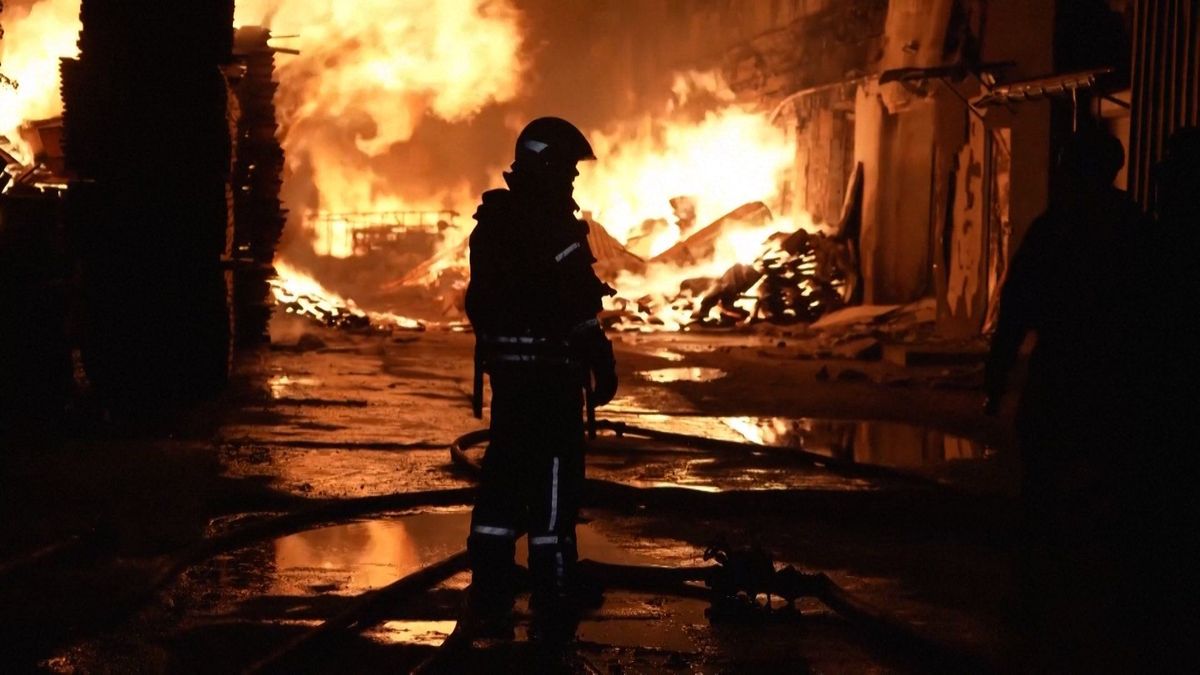
On a late Tuesday evening in October 2026, the city of Kharkiv, Ukraine, endured another devastating Russian drone attack. The assault targeted residential areas and industrial buildings, igniting fires that destroyed structures and forced immediate evacuations. Among those scrambling for safety were numerous elderly women and children, with firefighters heroically leading a disabled woman through the chaos to safety, highlighting the indiscriminate nature and profound human cost of the ongoing conflict.
The relentless targeting of Kharkiv by Russia is not a random act but a calculated strategy rooted in several layers of power dynamics, military doctrine, and economic realities. Kharkiv, Ukraine's second-largest city, sits perilously close to the Russian border, making it a constant, vulnerable target for short-range drone and missile strikes. This geographical proximity grants Russia a significant tactical advantage, allowing it to deploy relatively inexpensive Shahed-type drones and other munitions with minimal warning time, overwhelming Ukrainian air defenses that are often stretched thin across a vast front line.
Russia's primary objective in these attacks extends beyond immediate military gains. The consistent bombardment serves multiple purposes. Firstly, it aims to degrade Ukraine's industrial capacity and logistics, even if the strikes are often described as targeting military infrastructure, the reality on the ground frequently involves civilian facilities. Secondly, and perhaps more critically, it is a potent tool of psychological warfare. By making daily life unbearable and unsafe, particularly in major urban centers like Kharkiv, Moscow seeks to erode civilian morale, incite panic, and pressure the Ukrainian government into concessions. The hope is that a population exhausted by constant threat will eventually demand an end to the conflict, regardless of the terms. This strategy leverages the inherent asymmetry of drone warfare: Russia can produce and launch these drones at a fraction of the cost and risk compared to Ukraine's efforts to intercept them. Each successful interception by an expensive air defense missile against a cheap drone represents a net win for Russia in the war of attrition.
Furthermore, these attacks are designed to stretch Ukraine's limited air defense resources. By forcing Kyiv to deploy advanced anti-air systems to protect cities far from the front lines, Russia creates vulnerabilities elsewhere, potentially opening windows for more significant ground or air operations. The international community's supply of air defense systems, while crucial, often struggles to keep pace with the sheer volume of Russian drone and missile production, creating a perpetual deficit for Ukraine. The decision to target residential areas, as seen in Kharkiv, sends a clear message: no place is truly safe, and the conflict will continue to spill into the lives of ordinary citizens, regardless of their direct involvement in combat. This is a deliberate tactic to inflict maximum societal disruption with minimal direct military engagement from Russia's side, shifting the burden of defense and suffering onto the Ukrainian populace.
The drone attack on Kharkiv on that late Tuesday evening, like countless others before it, exacted its heaviest toll not on military installations, but on the most vulnerable members of society: the elderly, children, and disabled individuals. These populations, often with limited mobility or reliant on established routines and support networks, are disproportionately affected by sudden evacuations, loss of homes, and the pervasive fear of bombardment. The image of firefighters guiding a disabled woman to safety is a stark reminder of the immense challenges faced by those least equipped to cope with the chaos of war.
Beyond the immediate physical destruction and potential injuries, the psychological trauma inflicted by such attacks is profound and long-lasting. Children exposed to constant air raid sirens, explosions, and the sight of destroyed homes develop post-traumatic stress disorder (PTSD), anxiety, and depression. Their sense of safety and normalcy is shattered, impacting their development, education, and overall well-being. For the elderly, the loss of their homes, often repositories of a lifetime of memories and stability, can be devastating. Displacement from familiar surroundings, coupled with the stress of survival, exacerbates existing health conditions and isolates them from critical support systems. The constant threat forces many to live in basements or shelters, disrupting sleep, access to nutrition, and medical care, effectively turning daily existence into a struggle for survival.
Kharkiv's residents have endured years of this relentless pressure. The city, once a vibrant industrial and cultural hub, has been transformed into a symbol of civilian resilience under siege. The destruction of homes, schools, hospitals, and industrial buildings not only displaces families but also dismantles the economic and social fabric of the community. Businesses are unable to operate, jobs are lost, and the city's ability to rebuild is constantly undermined by new attacks. The long-term economic impact is staggering, requiring massive reconstruction efforts that are perpetually delayed by ongoing hostilities. The human cost also extends to the strain on emergency services, medical personnel, and humanitarian aid workers who operate under constant threat, risking their lives to save others and provide essential support in a war zone. The cumulative effect is a population living in a state of perpetual crisis, their lives defined by a conflict they did not choose, bearing the brunt of geopolitical ambitions.
While official statements from Russia often frame these attacks as precision strikes against military targets or as "retaliation" for Ukrainian actions, the reality on the ground, as evidenced by the Kharkiv drone attack, tells a different story. The deliberate or reckless targeting of residential areas, industrial buildings, and civilian infrastructure is consistently downplayed or outright denied by Moscow. What is omitted is the systematic nature of these strikes, which appear designed not just to degrade military capabilities but to break the will of the civilian population and render large parts of Ukraine uninhabitable or economically unviable. The narrative of "demilitarization" or "denazification" conveniently ignores the human suffering inflicted upon ordinary citizens, portraying them as collateral damage rather than direct targets in a strategy of attrition.
The Russian state media apparatus works tirelessly to control the narrative, either by ignoring civilian casualties entirely or by blaming Ukraine for misfiring air defense systems or staging incidents. This propaganda aims to dehumanize the victims and justify the aggression to a domestic audience, while simultaneously sowing doubt and confusion internationally. The true scale of displacement, the psychological scars on children, and the destruction of civilian life are systematically minimized or reframed to fit a predetermined political agenda. What is also often overlooked is the sheer volume and cost-effectiveness of Russia's drone strategy. While the international community focuses on high-profile missile strikes, the constant barrage of cheaper, Iranian-supplied Shahed drones represents a continuous, low-cost harassment campaign that drains Ukrainian resources and terrorizes populations daily, without generating the same level of international outcry as larger attacks.
Furthermore, the international community, while condemning the attacks and providing aid, sometimes inadvertently downplays the sheer exhaustion and long-term strain on the Ukrainian populace. The focus often remains on military aid and front-line dynamics, while the insidious, grinding attrition of civilian life in cities like Kharkiv receives less sustained attention. Governments and international organizations might highlight resilience, but the underlying narrative of a population pushed to its limits, constantly rebuilding only to see it destroyed again, is often softened. The long-term implications for Ukraine's demographic future, its economic recovery, and the mental health of an entire generation are immense, yet these are complex, less immediate concerns that often take a backseat to urgent military needs and diplomatic maneuvering. The full, unvarnished human cost of this prolonged, urban drone warfare, particularly on the most vulnerable, remains a story often told in fragments, overshadowed by the broader geopolitical struggle.
The situation in Kharkiv and other frontline Ukrainian cities will remain a critical barometer of the broader conflict. Readers should closely monitor Russia's continued reliance on drone and missile attacks against urban centers. Any significant increase in the frequency or intensity of these strikes could signal a renewed effort to break Ukrainian morale or to further degrade critical infrastructure ahead of potential ground offensives. Conversely, a decrease might indicate resource constraints or a shift in tactical priorities.
On Ukraine's side, the effectiveness and sustainability of its air defense systems will be paramount. Watch for calls for more advanced Western air defense technologies and ammunition, as well as any developments in Ukraine's own drone production and counter-drone capabilities. The resilience of the civilian population in Kharkiv will also be a key indicator; observe any shifts in internal displacement patterns, the functioning of essential services, and the psychological impact on residents. The ability of the Ukrainian government and international aid organizations to provide sustained humanitarian support and initiate reconstruction efforts, even amidst ongoing attacks, will be crucial.
Internationally, pay attention to the level and type of military and financial aid provided to Ukraine. Any wavering or significant increases in support will directly impact Kyiv's ability to defend its cities and protect its citizens. Also, observe diplomatic efforts to de-escalate the conflict or impose stricter accountability on Russia for targeting civilians. The fate of Kharkiv, given its strategic location and the relentless pressure it faces, will continue to serve as a stark reminder of the human cost of this war and a critical test of global resolve.
Kharkiv's close proximity to the Russian border makes it highly vulnerable to short-range drone and missile strikes. Russia targets the city to degrade Ukrainian industrial capacity, stretch air defenses, and erode civilian morale through psychological warfare.
The human cost includes displacement, physical injury, and severe psychological trauma like PTSD, especially for vulnerable groups such as the elderly, children, and disabled individuals. These attacks also destroy homes, disrupt essential services, and dismantle the economic and social fabric of communities.
Russia typically frames these attacks as precision strikes against military targets or as 'retaliation,' often denying or downplaying civilian casualties. This narrative aims to justify aggression and control public perception, both domestically and internationally.
Source referenced: ALJAZEERA
This brief was synthesized by our Editorial Engine and reviewed by The Ground Narrative team.