TRENDING

Saturday, 19 September 2026
----------------------
8 Rabi' Al-Thani 1448 AH
Israeli artillery wounded two civilians in southern Lebanon as troops pushed toward border towns, exposing the fragile implementation of a U.S.-brokered withdrawal pact. The clash highlights who holds the levers of force and who bears the daily toll.
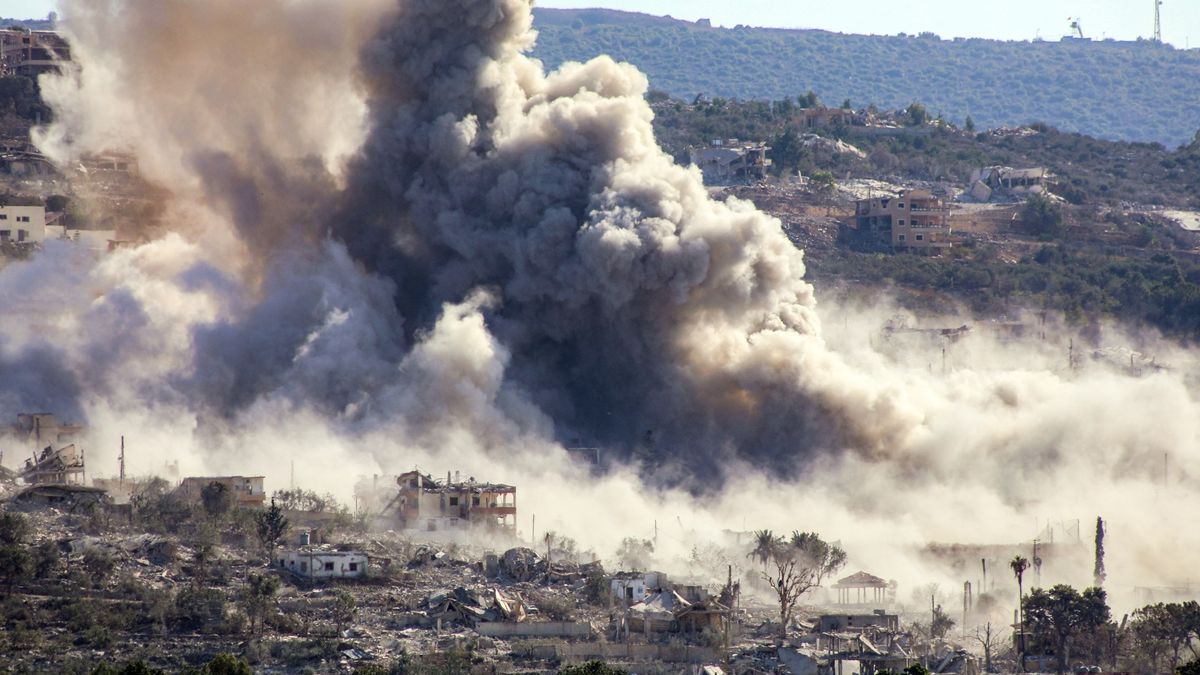
Israeli artillery struck the village of Chaqra in Lebanon’s Bint Jbeil district, injuring two civilians who were later taken to Tebnin hospital. At the same time, Israeli forces advanced toward Deir Mimas, clashed with Lebanese soldiers, and shelled several other border towns, while a public hospital in Meiss el‑Jabal was set ablaze.
The episode sits at the intersection of three overlapping incentive structures. First, Israel’s military doctrine treats any Hezbollah‑linked activity near its northern frontier as a justification for forward‑positioning, even when a June 2026 framework—mediated by the United States—calls for a phased Israeli pull‑back and Lebanese army deployment. Second, the Lebanese army, constrained by limited resources and a fragile political coalition, relies on the U.S.‑backed trilateral de‑confliction group to avoid accidental escalation, yet it lacks the authority to enforce a security perimeter that would keep Israeli armor at bay. Third, Hezbollah’s strategic calculus hinges on maintaining a credible deterrent; any perceived Israeli encroachment fuels its narrative of resistance, which in turn pressures the Lebanese government to appear firm despite its dependence on external security guarantees. The United States, meanwhile, balances a desire to keep the Israel‑Hezbollah front from spiraling into a broader regional war against the political cost of appearing to condone Israeli occupation of Lebanese territory.
The two injured civilians are a micro‑cosm of a population that has endured four years of intermittent shelling, displacement, and economic stagnation. Border towns such as Bint Jbeil and Marjayoun host families whose livelihoods depend on agriculture and cross‑border trade—activities repeatedly disrupted by artillery fire and road blockades. The burning of Meiss el‑Jabal’s public hospital deprives an entire district of essential medical care, forcing patients to travel longer distances under hazardous conditions. Children, the elderly, and informal workers—already bearing the brunt of Lebanon’s fiscal crisis—face heightened insecurity, loss of income, and the psychological trauma of living under a perpetual “security zone.”
Official statements from Jerusalem frame the shelling as “targeted security operations” aimed at neutralizing Hezbollah threats, deliberately omitting the fact that Israeli forces remain entrenched in a swath of Lebanese land captured during the March 2026 escalation. The U.S. de‑confliction mechanism is presented as a neutral buffer, yet it lacks enforcement power; its very existence allows Israel to claim diplomatic legitimacy while continuing to occupy territory. Lebanese officials, constrained by internal sectarian politics, downplay the scale of civilian casualties to avoid provoking a full‑scale confrontation that could destabilize the fragile government. International media coverage often isolates the incident as a “border skirmish,” sidestepping the broader pattern of Israel’s incremental annexation‑like presence and the systemic erosion of Lebanese sovereignty.
Watch for three converging signals. 1) Israeli troop movements: any sustained presence beyond the declared “security zone” will test the June framework’s viability and could trigger a formal Lebanese army deployment, raising the risk of direct clashes. 2) Hezbollah’s response: a calibrated rocket or drone strike aimed at Israeli positions would signal a shift from deterrence to active retaliation, potentially drawing in regional actors. 3) U.S. diplomatic activity: renewed pressure on Israel to honor the withdrawal timetable, or conversely, a quiet green‑light for further incursions, will shape the conflict’s trajectory and influence Lebanon’s internal political balance. Humanitarian NGOs and UNIFIL’s monitoring reports will also provide early warning of escalating civilian harm.
Source referenced: ALJAZEERA
This brief was synthesized by our Editorial Engine and reviewed by The Ground Narrative team.


