TRENDING

Saturday, 19 September 2026
----------------------
8 Rabi' Al-Thani 1448 AH
Indonesia's high-profile corruption cases, including the sentencing of tech founder Nadiem Makarim, raise questions about whether President Prabowo Subianto's crusade is about genuine reform or a strategic reshuffling of power. The broad interpretation of 'state loss' and weakened anti-corruption institutions allow for selective enforcement, fueling public distrust and driving away talent.
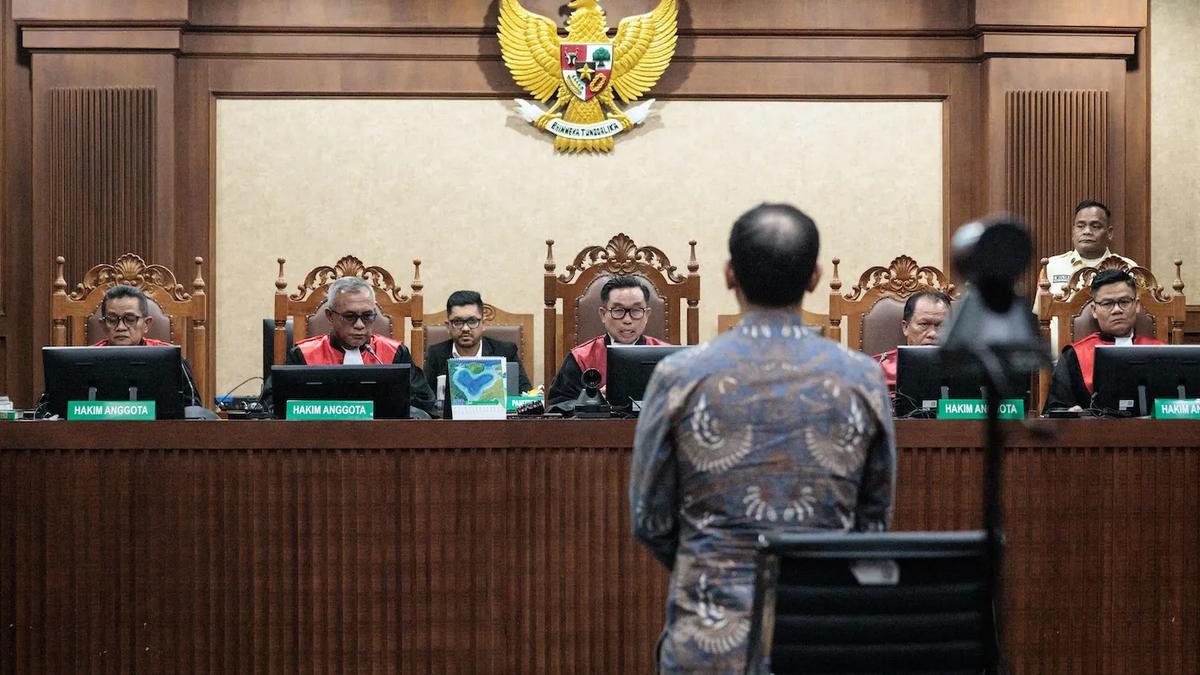
On June 30, Nadiem Makarim, a prominent Indonesian tech entrepreneur and former education minister, was sentenced to 10 years in prison for corruption. This high-profile conviction is a centerpiece of President Prabowo Subianto's populist campaign against corruption, a pledge he made upon taking office in 2024 to dismantle what he calls the 'corrupt elite' and recover stolen assets.
Prabowo's anti-corruption drive, while popular, appears to be less about systemic reform and more about consolidating power. The legal framework itself, particularly the concept of 'state loss,' has been described as *asal karet* (rubber laws), allowing prosecutors to stretch definitions to fit almost any circumstance without necessarily proving personal benefit or specific legal breaches. This ambiguity creates a potent weapon for political maneuvering. Furthermore, the weakening of the Corruption Eradication Commission (KPK) under former President Jokowi in 2019 fragmented Indonesia's anti-corruption architecture, leading to 'turf wars' between the police and the attorney general's office. Prabowo's administration is now leveraging these institutional rivalries, using investigations to replace old patronage networks with new ones, rather than dismantling corruption itself. The resignation of top anti-corruption prosecutor Febrie Adriansyah amidst his own corruption allegations underscores the internal power struggles at play.
The human cost of this selective enforcement is borne by ordinary Indonesians and the country's future prospects. Nadiem Makarim, once a symbol of Indonesia's tech ambitions, now faces a decade in prison, a verdict that critics warn risks criminalizing legitimate policy decisions. This creates a chilling effect on innovation and public service, as talented individuals may shy away from government roles. For younger generations, already frustrated by constrained economic opportunities, the perceived politicization of justice fuels a growing 'talent flight,' with skilled professionals and capital leaving the country. The viral slogan *kabur aja dulu* ('just leave') reflects a profound disillusionment and a crumbling trust in the legal system, which is increasingly seen as a tool for the powerful rather than a guarantor of fairness.
What powerful actors, including Prabowo's administration, are downplaying or omitting is the selective nature of these prosecutions. While some investigations may be legitimate, the consistent targeting of figures from previous administrations or those outside the new power structure suggests a strategic purge rather than an even-handed pursuit of justice. The government's narrative focuses on the sheer number of arrests and asset confiscations, framing it as a win for the people. However, this narrative conveniently sidesteps the lack of fundamental institutional reform, the expansion of legal definitions that can ensnare almost anyone, and the continued erosion of independent oversight. The real issue is not just individual corruption, but a system that allows power holders to define corruption to their advantage, thereby perpetuating a cycle of elite reshuffling rather than genuine accountability.
Readers should watch for the outcome of Nadiem Makarim's appeal, which will be a significant indicator of the judiciary's independence and the limits of the 'rubber laws.' Observe whether foreign investment, already flagging, further declines as the perception of legal and political risk increases. Crucially, monitor whether Prabowo's administration moves beyond high-profile prosecutions to implement genuine, systemic reforms that strengthen independent anti-corruption institutions and clarify legal definitions, rather than merely using them as instruments of political control. The true test will be whether opportunities for corruption are genuinely reduced, or if the current crackdown simply replaces one set of powerful beneficiaries with another.
Source referenced: FOREIGNPOLICY
This brief was synthesized by our Editorial Engine and reviewed by The Ground Narrative team.


