TRENDING

Saturday, 19 September 2026
----------------------
8 Rabi' Al-Thani 1448 AH
A Generation Z-led movement in India, sparked by leaked exam papers, has brought tens of thousands of protesters to the streets, forcing the resignation of the Education Minister and challenging the authority of Prime Minister Narendra Modi. The protests mark a significant shift in India's political atmosphere, with young people using digital media to organize and defy the government.
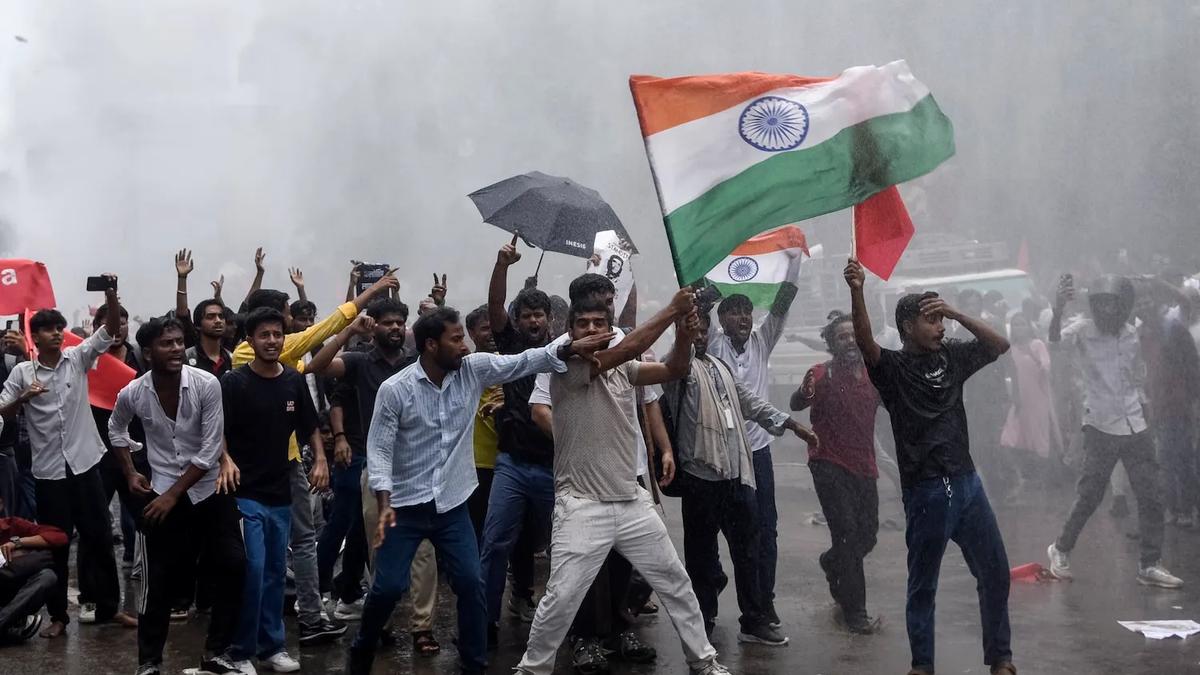
In a stunning display of defiance, tens of thousands of young people took to the streets of New Delhi, marching towards Parliament to protest against the government's handling of leaked exam papers. The movement, which began as a satirical response to a derogatory remark by India's chief justice, quickly gained momentum, forcing the resignation of Education Minister Dharmendra Pradhan. The protests mark a significant shift in India's political atmosphere, with young people using digital media to organize and defy the government.
The protests have exposed the limits of the ruling Bharatiya Janata Party's (BJP) propaganda machine, which has long relied on charisma, fear, and the projection of authority to maintain control. The BJP's systematic weakening of India's judiciary, Parliament, statutory bodies, and the Election Commission has created an environment in which the formal avenues for redress are broken, forcing people to take to the streets. The opposition parties, including the Indian National Congress, have attempted to amplify the voices of the protests, but their ability to translate this unrest into a decisive electoral mandate remains to be seen.
The protests have been driven by a sense of existential crisis among India's youth, who face a severe lack of viable employment opportunities. With nearly 40% of graduates under 25 unemployed, the promise of socioeconomic advancement in a hierarchical society has broken down. The protests have created a unified demographic of discontent, transcending fault lines of caste, class, region, and religion. The use of vulgar street slang to communicate deep grievances has stripped Prime Minister Modi of his carefully cultivated authority, puncturing the aura of invincibility that has long insulated him from criticism.
What the government and official statements are downplaying is the depth of the crisis facing India's youth. The protests are not just about leaked exam papers, but about the structural failures of the Indian economy and the destruction of opportunities. The government's response to the protests, which has included violent police action, has only served to deepen the grievances and create a sense of betrayal among the youth. The opposition parties, too, are facing a crisis of credibility, with their ability to respond to the protests and translate them into a decisive electoral mandate still uncertain.
As the situation unfolds, it is crucial to watch for the government's response to the protests. Will Prime Minister Modi respond with further repression, or will he attempt to address the grievances of the youth? The opposition parties, too, face a critical test, as they attempt to amplify the voices of the protests and translate them into a decisive electoral mandate. The outcome will have significant implications for India's democracy, with the potential to either rejuvenate fading democratic institutions or further erode trust in the political system. The world will be watching as India navigates this critical moment, with the youth-led protests marking a significant shift in the country's political atmosphere.
Editor's Note: The analysis is based on current events and trends, but the outcome of the situation is uncertain and subject to change.
Source referenced: FOREIGNPOLICY
This brief was synthesized by our Editorial Engine and reviewed by The Ground Narrative team.


