TRENDING

Thursday, 17 September 2026
----------------------
6 Rabi' Al-Thani 1448 AH
India's government is cracking down on protesters accused of 'abusing' Prime Minister Narendra Modi, sparking concerns over freedom of speech and assembly. The move comes after the Cockroach Janta Party-led demonstrations ended on July 25, with police cases and social media takedowns following many participants.
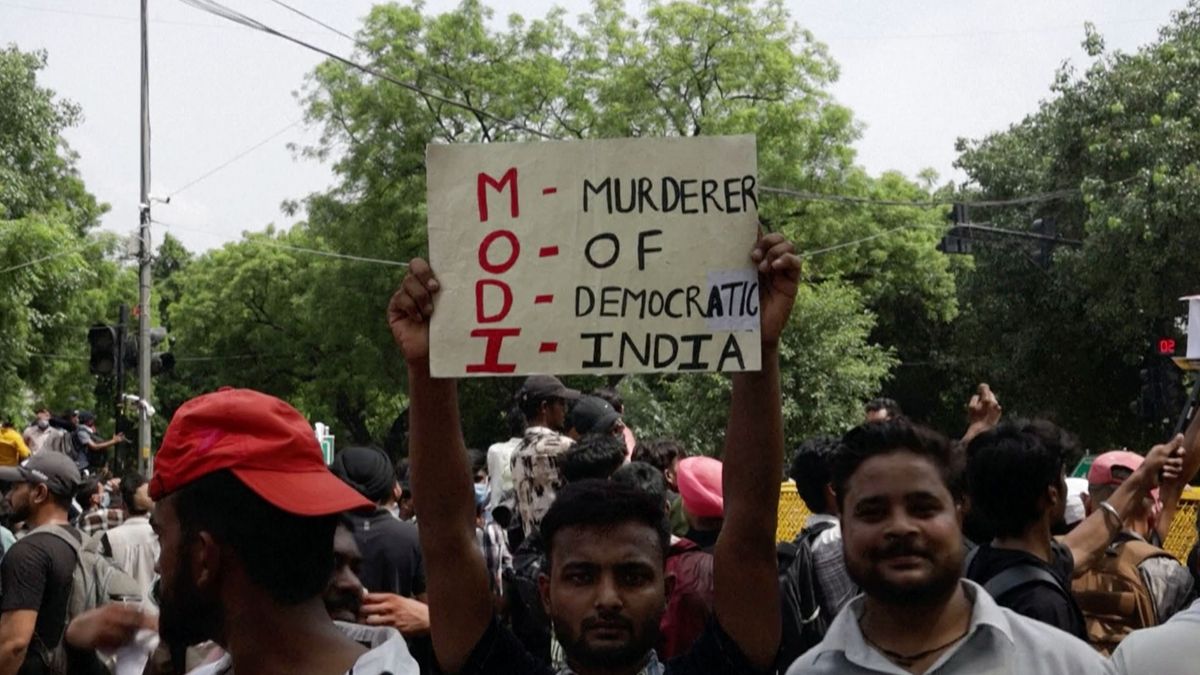
The Indian government has launched a crackdown on protesters who participated in the Cockroach Janta Party-led demonstrations that ended on July 25. The protests, which saw thousands take to the streets, were met with a swift response from the authorities, with police cases and social media takedowns targeting many who took part.
At the heart of this crackdown is the Indian government's desire to maintain control and suppress dissent. Prime Minister Narendra Modi's statement that he 'forgives' those who 'abused' him during the protests is a clever move, as it portrays him as a benevolent leader while also reinforcing the notion that criticism of him is unacceptable. This is a classic example of the power dynamics at play, where the government uses its authority to silence opposition and maintain its grip on power.
The people who bear the human cost of this crackdown are the protesters themselves, many of whom are now facing police cases and online abuse. The silencing of dissenting voices has a chilling effect on free speech and assembly, making it more difficult for people to express their opinions and participate in the democratic process. This is particularly concerning in a country like India, which has a long history of vibrant democracy and public debate.
What the Indian government is downplaying is the underlying discontent that drove thousands of people to take to the streets in the first place. The protests were not just about 'abusing' the prime minister, but about expressing frustration with the government's policies and actions. By focusing on the 'abuse' narrative, the government is able to shift the attention away from the real issues and onto the protesters themselves.
As the situation unfolds, readers should watch for further restrictions on free speech and assembly. The Indian government's crackdown on protesters is a worrying sign, and it is likely that we will see more attempts to suppress dissent in the coming months. Additionally, the international community's response will be crucial in determining the trajectory of this situation. Will other countries speak out against the Indian government's actions, or will they remain silent?
Editor's Note: The analysis is based on publicly available information and may not reflect the full complexity of the situation on the ground.
Source referenced: ALJAZEERA
This brief was synthesized by our Editorial Engine and reviewed by The Ground Narrative team.


