TRENDING

Friday, 7 August 2026
----------------------
24 Safar 1448 AH
Despite a so-called ceasefire, one child is killed every day in Gaza, with hundreds more wounded and severely impacted by the ongoing conflict. The humanitarian crisis deepens as families are confined to rubble-strewn areas, facing acute malnutrition, disease, and limited access to healthcare and education. As the international community pledges aid and peace, the question remains: will the killing stop, and will aid reach those who need it most?
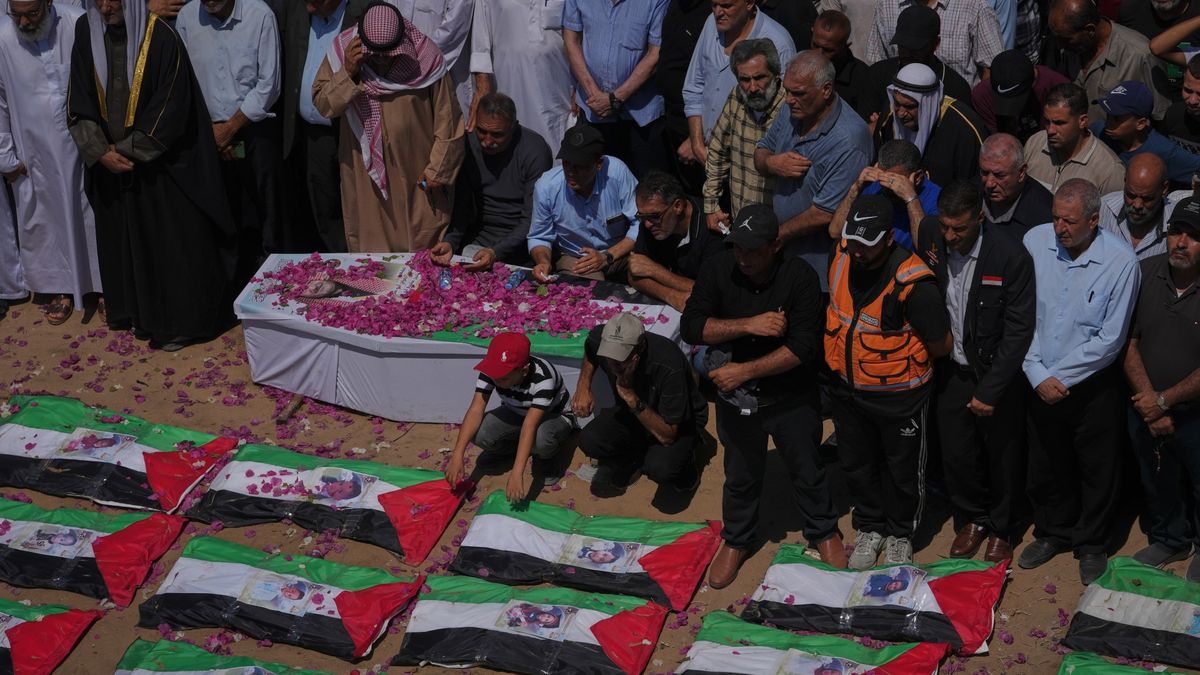
The United Nations children's agency, UNICEF, has reported that at least 300 children have been killed in Gaza since a ceasefire was announced on October 10, 2025. This averages out to one child killed per day, with hundreds more wounded, many severely. The agency has pressed parties to a proposed US-led peace plan to translate pledges into action, emphasizing that a ceasefire that leaves an average of one child dead each day is failing children.
The ongoing conflict in Gaza is a complex web of power dynamics, with various actors vying for influence and control. Israel's military actions have been a major driver of the humanitarian crisis, with the country's government citing security concerns as justification for its actions. The US-led peace plan has been touted as a potential solution, but its effectiveness remains to be seen. Meanwhile, Palestinian families are caught in the middle, struggling to survive and provide for their children amidst the devastation.
The human cost of the conflict is staggering. More than 58,000 children have lost one or both parents, while over a million children require protection and psychosocial support. Many families are living through repeated displacement, loss of income, and limited access to healthcare, education, and protection. The aid community is working to provide support, but the scale of the crisis is overwhelming. Children are being stripped of their childhood, forced to spend their days fetching water, queueing for food, and gathering firewood rather than playing.
What is being downplayed or omitted in official statements is the long-term impact of the conflict on Gaza's children. The physical and emotional trauma inflicted on this generation will have far-reaching consequences, affecting not only their individual well-being but also the future of Palestinian society. The international community's response has been criticized for being inadequate, with many questioning the effectiveness of the proposed peace plan and the distribution of aid.
As the situation in Gaza continues to deteriorate, readers should watch for concrete actions from the international community to address the humanitarian crisis. Will the killing stop, and will aid reach those who need it most? UNICEF's delivery of school supplies and soap is a positive step, but much more needs to be done to provide safe, stimulating environments for children to grow and develop. The upcoming school year will be a critical test of the international community's commitment to supporting Gaza's children.
Editor's Note: The numbers and statistics cited in this analysis are based on reports from UNICEF and other reputable sources, but the situation on the ground is constantly evolving, and the accuracy of these figures may change over time.
Source referenced: ALJAZEERA
This brief was synthesized by our Editorial Engine and reviewed by The Ground Narrative team.