TRENDING

Sunday, 13 September 2026
----------------------
2 Rabi' Al-Thani 1448 AH
France battles its largest wildfires in decades, exposing the immediate human cost and the deeper systemic vulnerabilities to a rapidly changing climate.
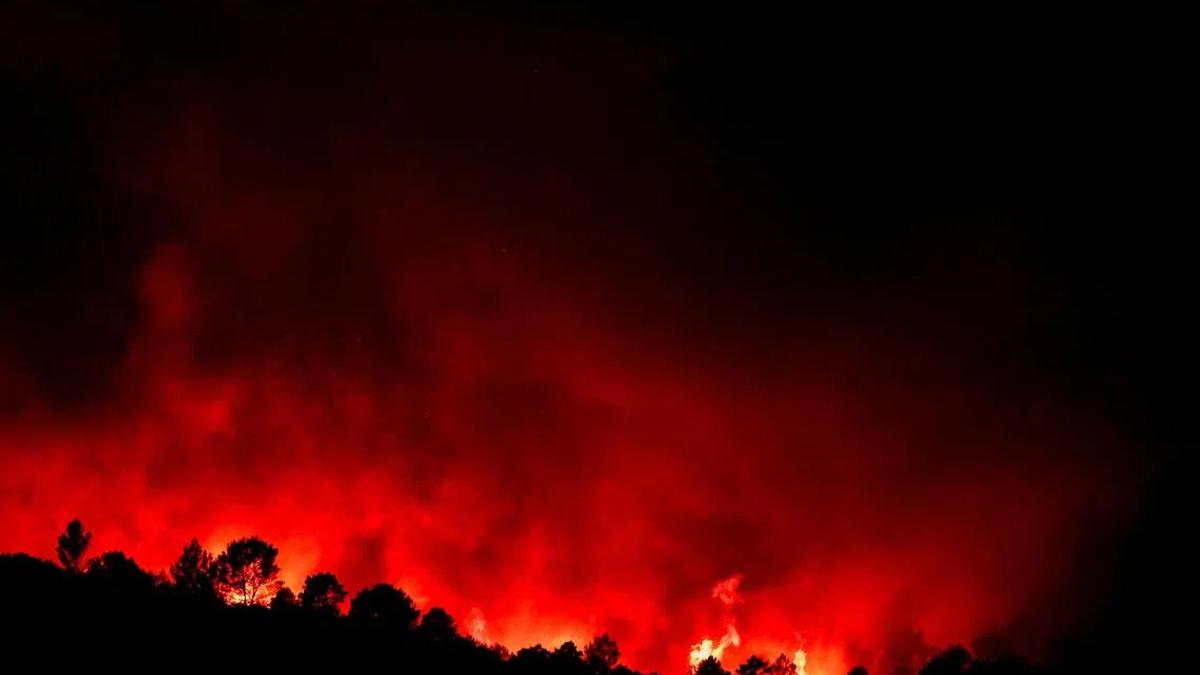
France has grappled with its largest wildfire in decades, a blaze near Bordeaux that scorched 42,000 hectares of pine forest and destroyed approximately 240 homes. While now declared "under control," the fire, likely ignited by a brushwood-clearing machine, forced the temporary evacuation of 220,000 people. This incident contributes to a grim national record for 2026, with 92,000 hectares burned across France—the highest total in two decades—a crisis exacerbated by persistent heatwaves that scientists directly link to human-made climate change.
The immediate power dynamic is visible in the state's capacity to mobilize resources: thousands of firefighters, water-bombing aircraft, and volunteers battling the inferno. This showcases the reactive strength of governmental emergency services. However, a deeper power dynamic is at play, one that transcends national borders and immediate responses. The very conditions that allowed a single spark to become a catastrophe are rooted in global industrial economies and their greenhouse gas emissions. Governments worldwide, including France's, are caught between the economic imperative of growth and the escalating costs of climate change. The brushwood-clearing machine, a tool of economic activity, inadvertently became the proximate cause, highlighting the tension between human enterprise and environmental fragility. Political leaders gain public trust by effectively managing crises, but their true power—or lack thereof—is revealed in their ability to enact long-term policies that address the systemic vulnerabilities that make such disasters increasingly common. The focus on bringing the fire "under control" allows for a narrative of success, momentarily sidestepping the more uncomfortable questions about the underlying forces that are making such control increasingly tenuous.
The human cost of these fires extends far beyond the immediate threat of flames. Over 220,000 individuals were uprooted from their lives, facing the trauma of sudden evacuation and the uncertainty of return. For the 240 families whose homes were destroyed, the loss is absolute, encompassing not just property but memories, stability, and a sense of place. Beyond these direct victims, entire communities face economic devastation. The pine forests near Bordeaux are vital for timber, tourism, and local ecosystems. Small businesses, agricultural producers, and tourism operators in the affected regions will grapple with lost revenue, damaged infrastructure, and a changed landscape for years to come. The psychological toll on residents, firefighters, and volunteers, witnessing their environment turn hostile, is immense and often unquantified. These are the ordinary citizens who bear the direct, tangible consequences of decisions made at global policy tables and in corporate boardrooms, decisions that have shaped the climate for decades.
While official statements laud the efforts to bring the fire "under control," what remains largely unaddressed is the profound shift in the fundamental conditions that enable such widespread destruction. The narrative of a spark from a machine, while factually correct, downplays the more critical "why now?" question. Governments and official bodies often focus on the immediate, manageable aspects of a crisis, rather than the systemic vulnerabilities that allow a localized event to become a national disaster. The record 92,000 hectares burned across France in 2026 is not an anomaly; it is a symptom of a new environmental reality. What is omitted is the long-term economic burden of rebuilding, the irreversible loss of biodiversity, and the creeping normalization of "extreme weather events." The focus on immediate containment allows for a temporary sigh of relief, but it deflects from the urgent need for comprehensive climate adaptation strategies, robust land management reforms, and a critical re-evaluation of economic activities that inadvertently heighten environmental risks. The true price of "under control" is the continued deferral of addressing the root causes.
As the immediate smoke clears, several critical indicators will reveal the deeper impacts and future trajectory. Observers should watch for the long-term recovery efforts in affected regions: how quickly will homes be rebuilt, and will communities return, or will some areas face permanent depopulation? Crucially, attention must be paid to how France and the wider European Union respond with policy. Will this record-breaking year accelerate investments in climate adaptation, forest management, and fire prevention technologies, or will it be treated as an isolated incident? The insurance industry's reaction will also be telling, as rising risk assessments could lead to higher premiums or even withdrawal from certain areas, further burdening citizens. Finally, the frequency and intensity of future heatwaves and dry spells will serve as a stark reminder of the ongoing climate crisis, shaping not just France's landscape, but its economy and social fabric for decades to come.
Source referenced: STRAITSTIMES
This brief was synthesized by our Editorial Engine and reviewed by The Ground Narrative team.


