TRENDING

Sunday, 20 September 2026
----------------------
9 Rabi' Al-Thani 1448 AH
Acting US Attorney-General Todd Blanche rescinded a controversial 'anti-weaponisation' fund to secure his Senate confirmation, revealing the deep political leverage wielded over America's justice system. This move highlights how institutional integrity can become a bargaining chip in high-stakes political appointments.
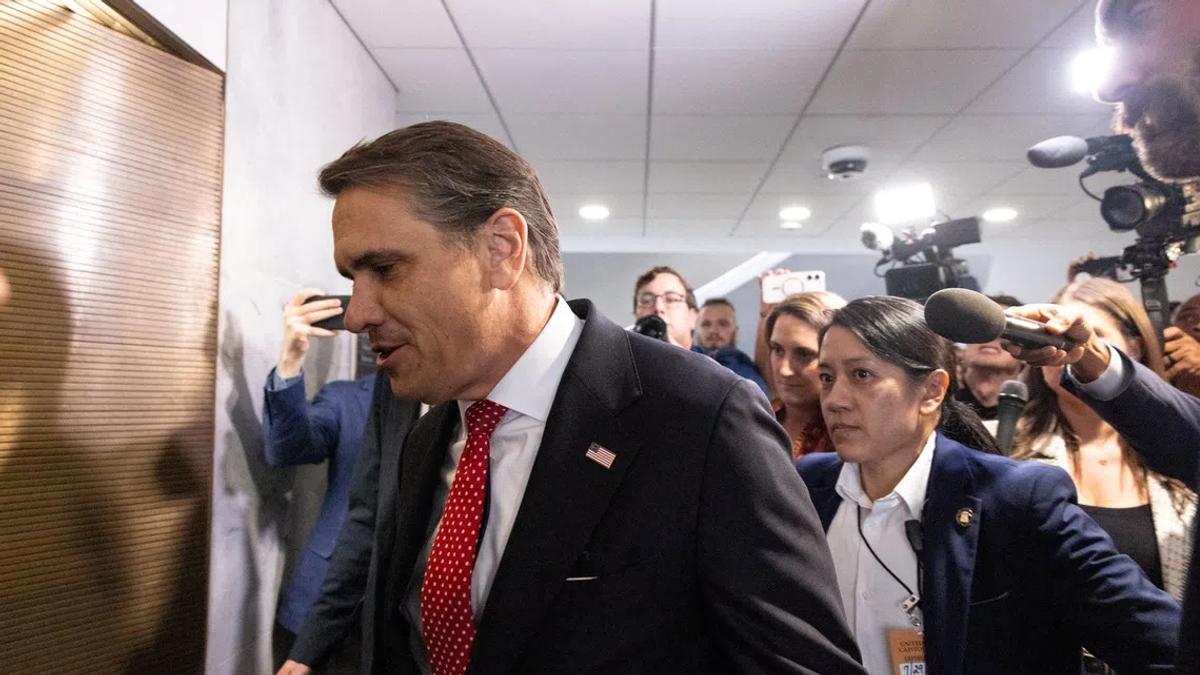
Acting US Attorney-General Todd Blanche, facing stiff Republican opposition, rescinded a contentious 'anti-weaponisation' fund just before his Senate confirmation vote. The fund, established as part of a settlement in former President Trump's $10 billion lawsuit against the IRS, was criticized as a potential vehicle for directing taxpayer money to Trump allies. Republican Senators John Cornyn and Thom Tillis had explicitly stalled Blanche's nomination, demanding written assurances that the fund would be terminated and that the scope of an IRS audit settlement would be limited to Trump and his immediate associates.
This episode lays bare the intricate power dynamics at play in Washington. Blanche's rescission was a direct concession to secure the necessary votes for his confirmation, illustrating the immense leverage individual senators can exert over executive appointments. For the Trump administration, securing Blanche's confirmation is critical to maintaining influence over the Department of Justice, especially as the former president continues to face legal challenges. The 'anti-weaponisation' fund itself was a product of a political framing, suggesting federal agencies were being used as partisan tools. By creating such a fund, the administration sought to institutionalize a mechanism to address these perceived grievances, effectively using the legal system to counter alleged political targeting. The Senate's intervention, however, demonstrated that even within the same party, factions can wield significant power, forcing the executive branch to alter its course to achieve its goals. This is not merely about a fund; it's about the ongoing struggle for control and influence over the machinery of federal power.
The primary human cost in this scenario is borne by the public, specifically in the erosion of trust in the impartiality of federal institutions. When the confirmation of the nation's top law enforcement officer becomes contingent on specific policy concessions related to a former president's personal legal battles, it signals a politicization of justice. Taxpayers, whose money would have potentially funded the controversial 'anti-weaponisation' fund, are left to question whether their resources are being used for legitimate public service or as political patronage. Furthermore, the precedent set—that a nominee's ascent can be bought with policy reversals—undermines the perceived independence of the Department of Justice and the IRS, critical agencies that are meant to operate above partisan fray. The ordinary citizen, seeking fair and unbiased application of the law, observes a system where political expediency appears to trump institutional integrity.
What is largely downplayed by all parties is the long-term damage to the institutional norms governing the Department of Justice and the IRS. Governments and official statements focus on the immediate political victory or concession, but rarely address the cumulative effect of such actions. The concept of an 'anti-weaponisation' fund, regardless of its ultimate fate, legitimizes the narrative that federal agencies are inherently partisan tools, rather than neutral arbiters of law. This narrative, amplified by political maneuvering, chips away at the public's confidence in these foundational pillars of governance. Moreover, while the fund was rescinded, former President Trump's stated intent to push Congress to codify it suggests that the underlying battle over the perceived politicization of federal agencies, and the desire to create mechanisms to counter it, is far from over. This ongoing struggle threatens to entrench a cycle where every action by a federal agency is viewed through a partisan lens, making genuine accountability and impartial enforcement increasingly difficult.
Readers should closely watch the immediate aftermath of this agreement: Will Blanche's confirmation proceed without further Republican hurdles? Beyond that, the critical next step is to observe whether former President Trump makes good on his promise to push Congress to codify the 'anti-weaponisation' fund. Any legislative attempt to revive such a fund would signal a deeper, more institutionalized effort to address perceived political targeting within federal agencies, potentially leading to new clashes between the executive and legislative branches. Finally, the broader implications for the Department of Justice under Blanche's leadership, particularly concerning investigations or policies that might touch on politically sensitive matters, will be a key indicator of how deeply this political bargain has reshaped the independence and operational scope of America's top law enforcement body.
Source referenced: STRAITSTIMES
This brief was synthesized by our Editorial Engine and reviewed by The Ground Narrative team.


