TRENDING

Saturday, 19 September 2026
----------------------
8 Rabi' Al-Thani 1448 AH
The Trump administration has ended special immigration protections for Cuban refugees, dismantling a decades-old policy born from the Cold War. This shift leaves thousands vulnerable to deportation, fundamentally altering America's promise to those fleeing the island.
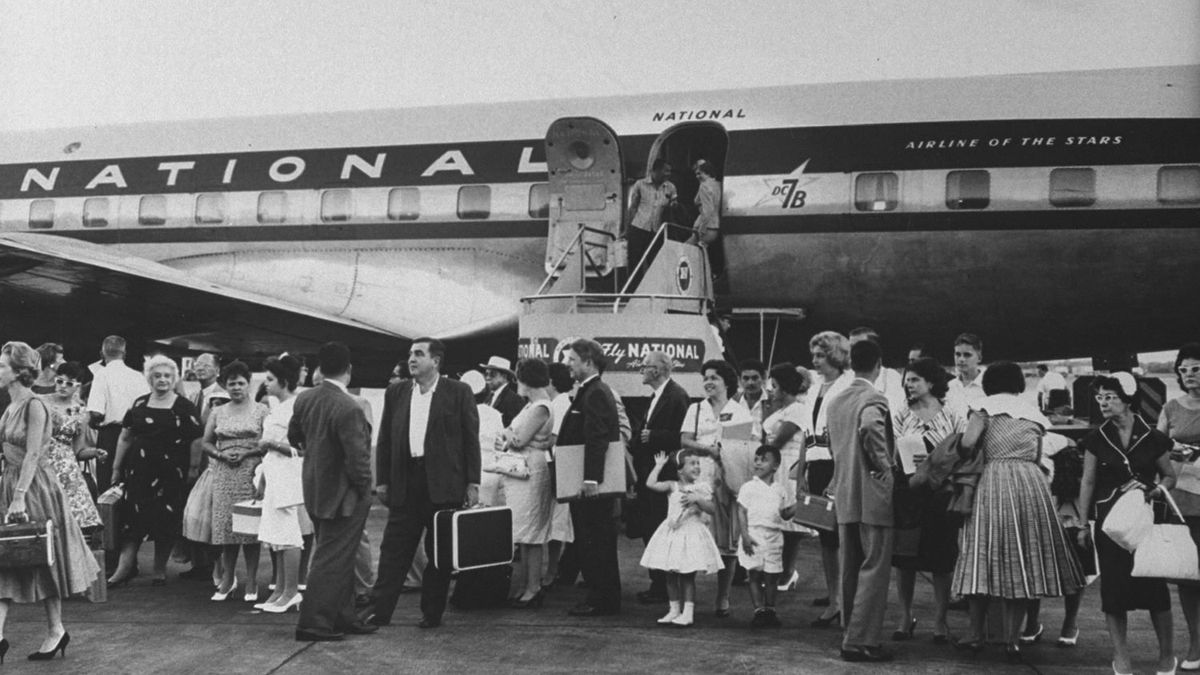
The Trump administration has officially ended the decades-long special immigration treatment for Cuban refugees, effectively placing them on the same footing as other non-citizens seeking asylum or residency in the United States. This policy reversal dismantles the 1966 Cuban Adjustment Act, which historically granted Cubans a unique, expedited path to permanent residency once they reached U.S. soil. As a direct consequence, thousands of Cubans have already been deported, with many sent to Mexico, marking a significant departure from an era when fleeing the communist island almost guaranteed a welcome in America.
The special status afforded to Cuban refugees was never purely a humanitarian gesture; it was a potent weapon in the Cold War ideological battle. Enacted in 1966, the Cuban Adjustment Act served as a powerful propaganda tool, allowing the United States to showcase itself as a beacon of freedom for those escaping Fidel Castro's communist regime just 90 miles from its shores. Welcoming these exiles, many of whom were property owners and professionals, underscored the perceived failures of socialism and bolstered U.S. anti-communist credentials globally. For decades, this policy ensured that Cubans who reached American shores, under the "wet foot, dry foot" policy, had a distinct advantage over other immigrant groups.
However, the geopolitical landscape shifted dramatically with the end of the Cold War. The strategic imperative to embarrass Cuba by welcoming its defectors waned. Over time, the nature of Cuban migration also changed, notably with events like the 1980 Mariel boatlift, which brought a more diverse group of migrants, including some with criminal records. This began to erode the "model immigrant" narrative and fueled criticism that the special treatment was anachronistic or even abused.
The Trump administration's decision to fully dismantle these protections is rooted in a broader domestic political strategy. It aligns with a hardline anti-immigration platform that seeks to reduce all forms of immigration and tighten border security, irrespective of historical context or humanitarian claims. This approach, heavily influenced by figures like Stephen Miller, prioritizes a perceived national interest in controlling borders over specific historical allegiances. The political calculus is clear: ending "special treatment" resonates with a base advocating for stricter immigration enforcement and a more uniform application of immigration law, even if it means abandoning a policy that once served a vital foreign policy objective.
The immediate and profound human cost of this policy shift falls squarely on Cuban migrants. For generations, the promise of the Cuban Adjustment Act served as a powerful motivator, a tangible hope for a new life free from the economic and political constraints of the island. Now, those who undertake perilous journeys by sea or land face detention, uncertainty, and the very real prospect of deportation back to the country they risked everything to leave. Families are caught in limbo, with some members potentially deported while others remain in the U.S., creating new layers of separation and trauma.
Beyond the immediate migrants, the policy reversal impacts the established Cuban-American community, particularly in places like Miami. For decades, this community leveraged its unique immigration status and strong anti-Castro stance to gain significant political influence, often aligning with the Republican Party. The erosion of this special status diminishes a core aspect of their community's identity and political leverage, forcing a re-evaluation of their relationship with the U.S. political system that once championed their cause. The psychological toll of living with increased fear and uncertainty, both for new arrivals and for those with family still on the island or in transit, is immeasurable. The narrative of America as a welcoming haven for Cubans has been fundamentally altered, leaving a legacy of dashed hopes and renewed vulnerability.
What is often downplayed or omitted in official statements regarding this policy change is the inherent selectivity and instrumentalization of refugee status throughout U.S. history. The 1966 Cuban Adjustment Act, while framed as a humanitarian response, was fundamentally a geopolitical maneuver. It was designed to undermine a hostile communist regime, not to establish a universal principle of asylum. The U.S. historically extended open arms to Cubans and, at times, Vietnamese refugees, while simultaneously implementing much stricter policies for those fleeing other oppressive regimes or economic hardship in places like Haiti or Central America.
The current administration's narrative often frames the end of special treatment as an issue of "fairness" – that all immigrants should be treated equally under the law. However, this framing conveniently omits the historical context: that the "special" treatment was a deliberate foreign policy choice. By collapsing this distinction without acknowledging its origins, the powerful actors are effectively erasing the strategic utility that Cuban refugees once served. The shift reveals that the definition of who constitutes a "deserving" refugee in America is highly fluid, often dictated by prevailing political winds and foreign policy objectives rather than consistent humanitarian principles. The "freedom" offered was conditional, and its conditions have now expired.
The immediate future will reveal several critical developments. Firstly, monitor the rate and destination of deportations for Cuban nationals. Will the U.S. continue to deport thousands to Mexico, or will direct repatriations to Cuba increase, potentially straining already tense bilateral relations? Secondly, observe the impact on Cuban migration patterns. Will the removal of special protections deter future attempts to reach the U.S., or will it push migrants towards even more dangerous, clandestine routes and alternative destinations?
Domestically, the political fallout in key states like Florida will be significant. How will the Cuban-American community, long a powerful voting bloc, react to this fundamental shift in policy? Will it lead to a re-alignment of political allegiances, or will other issues continue to dominate their voting behavior? Finally, this policy could serve as a precedent for other groups who have historically received specific, albeit less comprehensive, protections. The broader implications for U.S. asylum and immigration policy, particularly how the U.S. defines and treats those fleeing political or economic instability, will be a crucial indicator of America's evolving stance on global migration.
Source referenced: FOREIGNPOLICY
This brief was synthesized by our Editorial Engine and reviewed by The Ground Narrative team.


