TRENDING

Sunday, 20 September 2026
----------------------
9 Rabi' Al-Thani 1448 AH
French President Macron and Canadian PM Carney met on Saint Pierre and Miquelon, signaling a deepening Canada-Europe alignment. This symbolic visit underscores Ottawa's pivot away from a strained relationship with the United States.
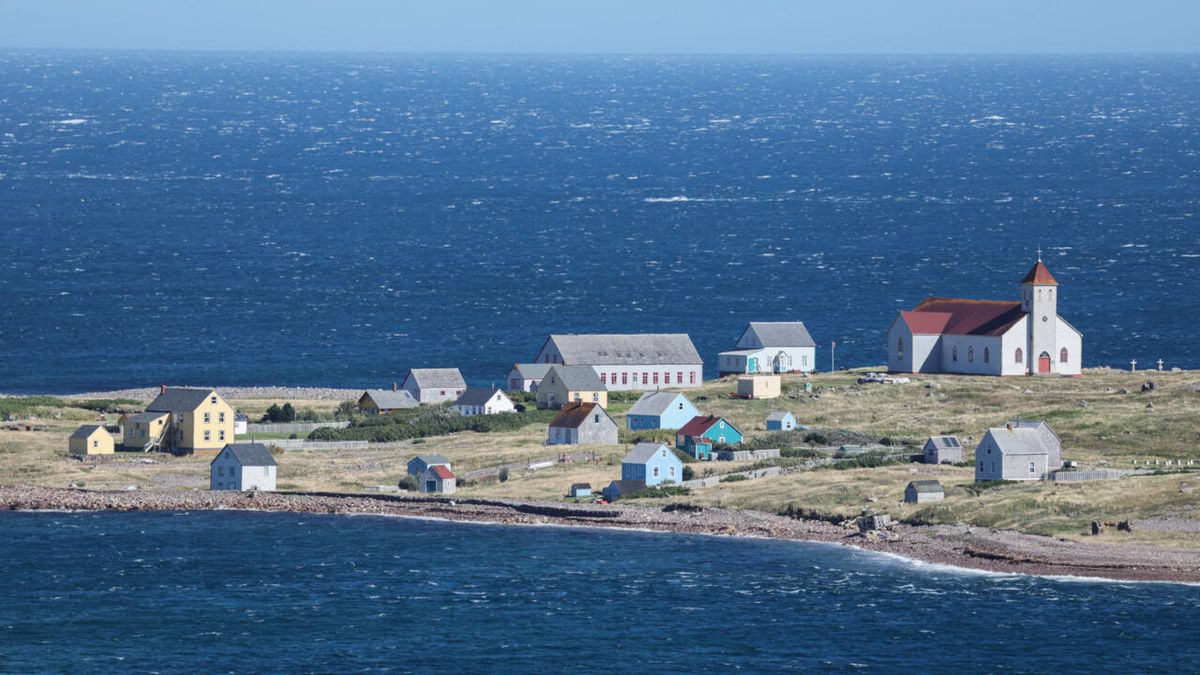
French President Emmanuel Macron recently embarked on a rare visit to Saint Pierre and Miquelon, France's last remaining North American territory, located just off the coast of Newfoundland. Significantly, Canadian Prime Minister Mark Carney joined him, marking the first time a Canadian premier has visited the archipelago. This high-profile meeting serves as a potent symbol of Canada's deliberate shift in foreign policy, seeking closer ties with Europe amidst escalating tensions with the United States.
This diplomatic event is not merely symbolic; it reflects profound shifts in power dynamics. For Canada, the move is a direct response to an increasingly strained relationship with the United States under President Donald Trump's second mandate. Trump's rhetoric, including threats of annexation and dismissive labeling of Carney as "governor," has pushed Ottawa to actively diversify its alliances. Canada's welcome of a proposal to become the European Union's first "associate member" is a concrete manifestation of this pivot, aiming to secure economic and political autonomy. For France, and by extension Europe, this aligns perfectly with President Macron's long-standing call for greater European sovereignty, particularly in security. A Canada-EU association strengthens Europe's global standing and provides a North American partner less beholden to Washington, reinforcing the idea of a multi-polar world where traditional alliances are being re-evaluated. The small islands of Saint Pierre and Miquelon, once a colonial remnant, are now being strategically framed as "France and Europe in North America," providing a tangible anchor for this new transatlantic alignment.
The human cost of these high-level geopolitical maneuvers often falls on those with the least agency. The nearly 6,000 residents of Saint Pierre and Miquelon are already grappling with severe economic and environmental challenges. The collapse of the local fishing industry, exacerbated by Canadian moratoriums and a shrinking French exclusive economic zone, has led to a declining population, outmigration of youth, and an uncertain future. Furthermore, the village of Miquelon is undergoing a climate-driven relocation due to rising sea levels, making their existence precarious. While the visit brings attention to their territory, the grand strategic discussions about "subarctic power" or "European sovereignty" do little to immediately address their daily struggles. For Canadian citizens, this pivot away from their largest trading partner and closest ally carries inherent risks, including potential economic retaliation from the US, as evidenced by Trump's threats of tariffs against the EU over Canada's association plan. The stability of cross-border communities, trade flows, and established security frameworks could all face disruptions.
Official statements from both Paris and Ottawa emphasize shared values and a commitment to independent decision-making. However, what is largely downplayed is the true depth of the fracture in the US-Canada relationship. The rhetoric of "tensions" glosses over what appears to be a fundamental re-evaluation of Canada's core strategic alignment, driven by a perception of disrespect and potential threat from its southern neighbor. Similarly, while Macron champions European sovereignty, the practical implications for NATO and transatlantic security are often left unaddressed. A more independent Europe and a Canada pivoting eastward inevitably raise questions about the future cohesion and effectiveness of the Western alliance system. Furthermore, the focus on Saint Pierre and Miquelon as a symbol of strength distracts from its profound vulnerabilities, offering little in the way of concrete solutions for its struggling population beyond rhetorical support.
Readers should closely watch the specifics of Canada's proposed "associate membership" with the European Union. The economic and political framework of this arrangement will reveal the true extent of the pivot. Pay attention to the US response: Will President Trump follow through on tariff threats, and how will Washington attempt to counter or adapt to Canada's new alignment? Domestically, the impact of this foreign policy shift on Canadian politics, especially leading up to future elections, will be crucial. Finally, observe whether the renewed diplomatic spotlight on Saint Pierre and Miquelon translates into tangible investments in its economic revitalization or climate resilience, or if its role remains primarily symbolic in the larger geopolitical game. The future of this small island will be a barometer for the sincerity and sustainability of this new transatlantic bond.
Source referenced: FRANCE24
This brief was synthesized by our Editorial Engine and reviewed by The Ground Narrative team.


