TRENDING

Friday, 18 September 2026
----------------------
7 Rabi' Al-Thani 1448 AH
A new Canada‑EU partnership is hailed as a win‑win, but the deal reshapes supply chains, pressures resource workers and Indigenous lands, and lets both sides sidestep larger geopolitical frictions.
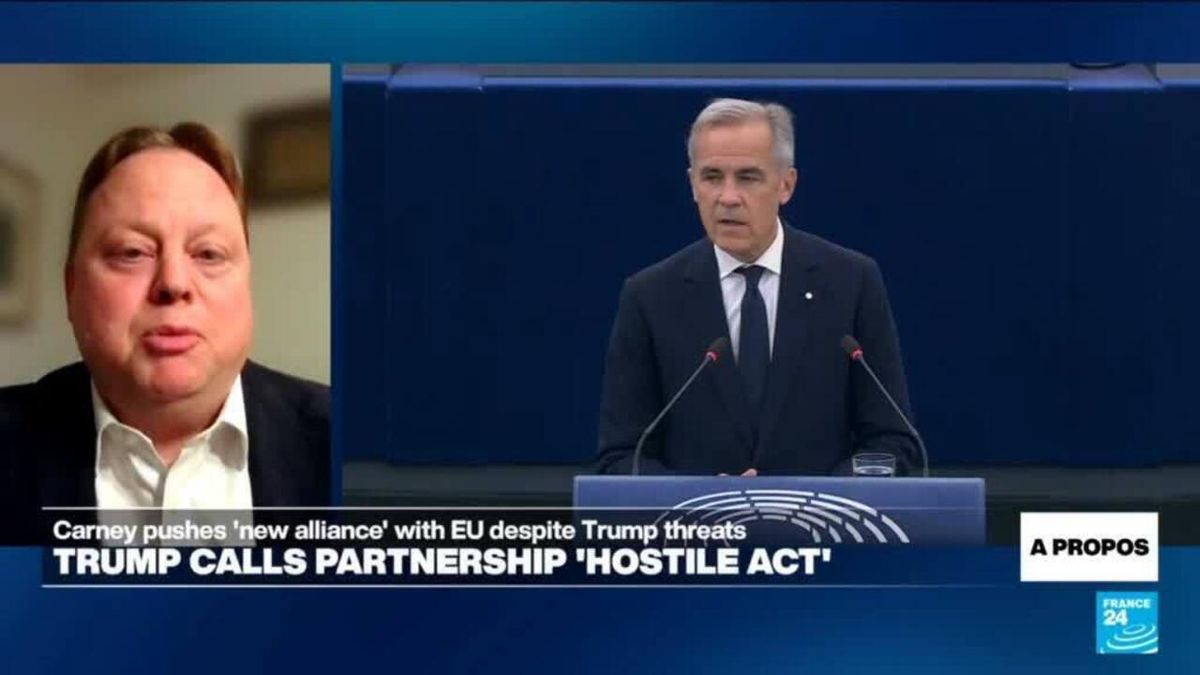
The European Policy Center’s chief economist described the freshly announced Canada‑EU partnership as a “classic win‑win.” The agreement promises deeper market access for Canadian commodities—energy, minerals, and agri‑food—while giving European firms a foothold in a resource‑rich, politically stable market.
The pact is less about economics than about strategic positioning. Europe, still wrestling with a post‑COVID energy transition and a volatile relationship with Russia, needs reliable supplies of uranium, lithium, and rare earths that Canada can deliver without the geopolitical baggage of China. For Canada, the EU offers a massive consumer base that can offset the United States’ protectionist tilt under recent trade policy shifts. By anchoring itself to Brussels, Ottawa diversifies its export portfolio, hedges against potential US‑Canada trade friction, and gains leverage in multilateral forums where the EU’s regulatory clout can shape standards that favour Canadian producers.
At the alliance level, both actors signal a united front against Beijing’s Belt‑and‑Road expansion. The partnership dovetails with the EU’s “Strategic Autonomy” agenda, allowing it to source critical inputs from a democracy that shares similar regulatory frameworks. For Canada, the deal reinforces its “middle power” identity, positioning Ottawa as a bridge between North America and Europe while preserving its autonomy from US‑centric security doctrines.
The human cost is scattered across three fronts. In Canada’s northern territories, expanded mining and oil projects threaten Indigenous lands, water sources, and traditional livelihoods. Communities such as the Dene and Inuit have repeatedly warned that increased export capacity will accelerate climate‑related disruptions without adequate consultation or benefit‑sharing.
European consumers may see lower prices for batteries and clean‑energy technologies, but the environmental toll of intensified extraction—deforestation, tail‑ings dam failures, and greenhouse‑gas emissions—often lands on distant ecosystems and workers in remote sites. Moreover, small‑scale farmers in both regions risk being squeezed out as large agribusinesses scale up to meet EU standards, potentially eroding local food sovereignty.
Official narratives gloss over the geopolitical calculus of bypassing US influence. By deepening ties with Brussels, Canada subtly signals that it can negotiate favorable terms outside the North‑American trade bloc, a move that could embolden other resource‑rich nations to seek similar “third‑party” partnerships.
Environmental safeguards are also downplayed. The EU’s Green Deal sets ambitious carbon‑neutral goals, yet the partnership’s language leaves room for “sustainable” extraction that can be interpreted loosely, allowing high‑emission projects to continue under the banner of “clean‑energy supply.” Finally, the agreement sidesteps the question of technology transfer: European firms gain access to Canadian data and research on critical minerals, potentially widening the gap between high‑tech economies and those left dependent on raw‑material exports.
Watch for the ratification process in the European Parliament and Canada’s House of Commons, where opposition parties may demand stricter Indigenous consultation clauses. Sector‑specific annexes—particularly on lithium, uranium, and timber—will reveal how environmental standards are being negotiated. Parallel to the trade talks, monitor NATO‑related dialogues; a stronger Canada‑EU economic bond could translate into coordinated security postures in the Arctic, a region already contested by Russia and China.
In the coming months, the EU’s upcoming climate summit and Canada’s federal elections will test the durability of the partnership. If either side leans toward more protectionist or climate‑hardline policies, the “win‑win” narrative could fracture, exposing the underlying power play that currently keeps the deal afloat.
Source referenced: FRANCE24
This brief was synthesized by our Editorial Engine and reviewed by The Ground Narrative team.