TRENDING

Saturday, 19 September 2026
----------------------
8 Rabi' Al-Thani 1448 AH
Brazilian President Luiz Inácio Lula da Silva has begun his reelection campaign, raising concerns about external meddling in the upcoming October vote. His emphasis on sovereignty highlights the ongoing struggle for control over Brazil's vast resources and political direction.
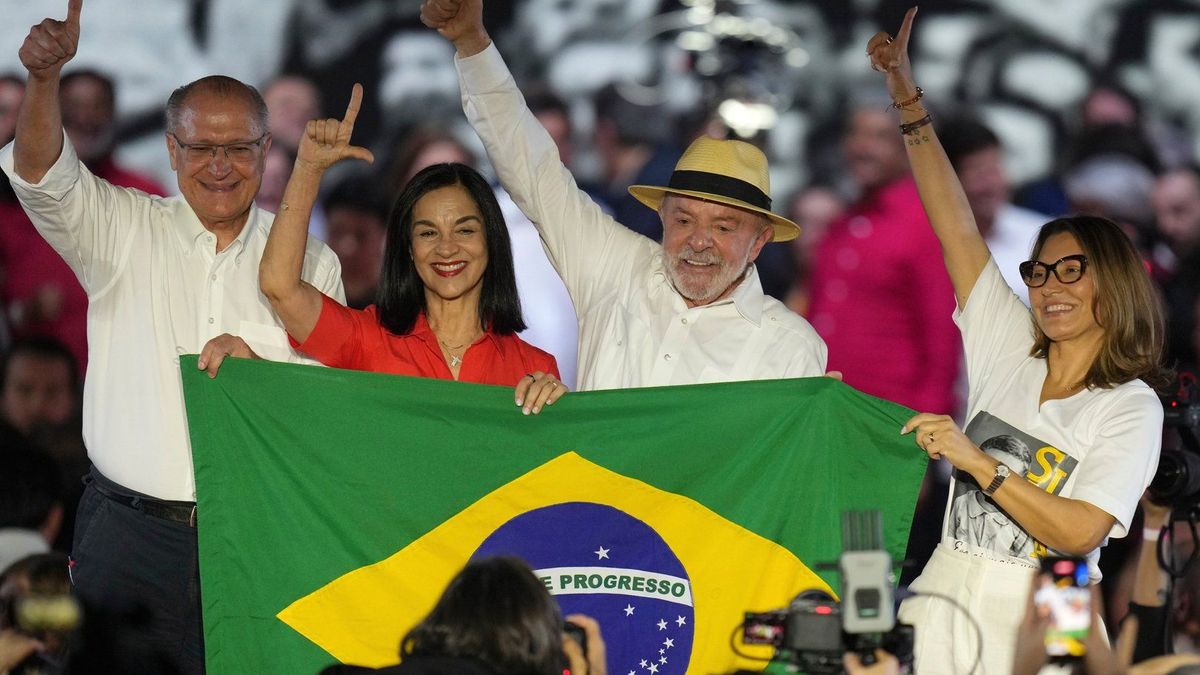
Brazilian President Luiz Inácio Lula da Silva has officially launched his campaign for reelection, with the October vote looming. During his announcement, Lula explicitly cautioned against foreign interference in the electoral process, underscoring his commitment to defending Brazil's national sovereignty amidst escalating political tensions. This statement sets a clear tone for a campaign that seeks to define Brazil's future direction, both domestically and on the global stage.
Brazil, as a major global economy, a critical player in the BRICS bloc, and a custodian of immense natural resources including the Amazon rainforest, is rarely left to its own devices when it comes to national elections. The power mechanics at play are multifaceted. For global powers and multinational corporations, Brazil's political trajectory directly impacts commodity markets, environmental regulations, and access to strategic resources. A government that prioritizes national control over resources or adopts an independent foreign policy, as Lula often advocates, can disrupt established economic interests and geopolitical alignments. Conversely, a government more amenable to foreign capital or aligned with specific global blocs could be seen as a strategic asset. The 'foreign interference' Lula warns against isn't always overt military intervention; it often manifests through financial leverage, media narratives, intelligence operations, and the subtle backing of political factions that align with external agendas. The incentive for powerful actors, whether states or corporations, is to secure favorable economic terms, ensure resource access, or maintain ideological influence in a country whose decisions ripple across continents.
The most significant human cost of foreign interference in any election falls squarely on the citizens of the nation. When external forces attempt to sway public opinion or manipulate electoral outcomes, the integrity of the democratic process is undermined, and the true will of the people is obscured. In Brazil, this means that ordinary voters, from urban centers to remote Amazonian communities, may find their choices influenced by narratives and financial flows originating far beyond their borders. Furthermore, the policies enacted by a government potentially influenced by foreign interests might not serve the best interests of the Brazilian population, particularly the most vulnerable. Indigenous communities, environmental activists, and local farmers, whose livelihoods and lands are directly tied to national resource and environmental policies, are particularly susceptible. Their future often hinges on whether Brazil's leaders prioritize national sovereignty and local well-being over external economic pressures.
What often goes unsaid in official warnings about foreign interference are the specific actors and their precise motivations. Lula's general caution, while politically potent, leaves the identities of these 'foreign' entities ambiguous. Are they state actors from rival global powers seeking to shift Brazil's alliances? Are they powerful multinational corporations aiming to secure specific concessions or block unfavorable regulations? Or are they a combination of both, operating through complex networks of lobbying, media influence, and financial support for specific candidates or parties? Governments and powerful corporations rarely admit to such activities, framing their engagement as legitimate diplomatic relations, investment, or humanitarian aid. The untold story is often the intricate web of economic dependencies, historical grievances, and ideological battles that make a country like Brazil a battleground for global influence, with local political figures sometimes acting as unwitting or willing conduits for external agendas. The true extent of digital disinformation campaigns, often originating from outside the country but amplified internally, is also frequently downplayed.
As the October election approaches, several dynamics will bear close watching. Firstly, observe how Lula's opponents address the issue of foreign interference – whether they dismiss his claims, echo them, or attempt to redirect the narrative. Secondly, monitor the rhetoric and actions of major global powers and international financial institutions regarding Brazil; their statements and investment patterns can offer clues about their preferred outcomes. Thirdly, pay attention to the digital space: the spread of disinformation and the sources behind it will be critical indicators of external influence attempts. Finally, the resilience of Brazil's democratic institutions, its electoral court, and its civil society organizations in safeguarding the vote will be paramount. The outcome of this election will not only determine Brazil's domestic policies but will also significantly shape its role in the shifting global order, impacting everything from climate action to commodity prices and regional stability.
Source referenced: ALJAZEERA
This brief was synthesized by our Editorial Engine and reviewed by The Ground Narrative team.


