TRENDING

Saturday, 19 September 2026
----------------------
8 Rabi' Al-Thani 1448 AH
Two years after a student-led uprising ended the rule of Sheikh Hasina, Bangladesh's government is facing criticism for backtracking on key reforms. The country's fragile democracy is at risk of slipping backward, with many fearing a return to the state-backed violence that marked Hasina's rule.
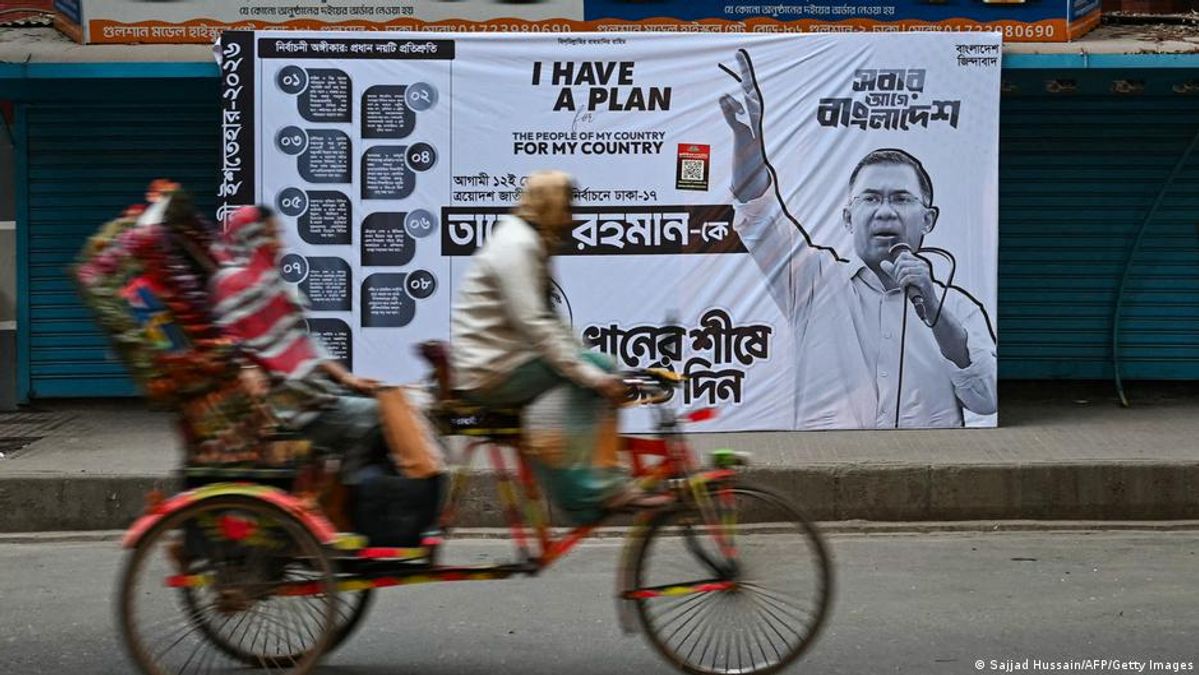
Bangladesh's government, led by Prime Minister Tarique Rahman, has been accused of failing to deliver on its promises to implement key reforms. The July Charter, a reform roadmap signed by the interim government in 2024, proposed term limits for prime ministers, the creation of an upper house of parliament, stronger presidential powers, and greater judicial independence. However, critics say the current government has refused to adopt several key ordinances, including measures concerning the National Human Rights Commission and the Anti-Corruption Commission.
The power struggle in Bangladesh is complex, with multiple actors vying for influence. The Bangladesh Nationalist Party (BNP), which won a decisive majority in the general election, is facing criticism for its failure to implement reforms. The opposition Jamaat-e-Islami-led alliance is also playing a significant role, with some accusing the BNP of betraying the public's trust. The military, which backed the interim government, is also a key player in the country's politics.
The human cost of Bangladesh's political instability is significant. The 2024 uprising, which began as a protest against a controversial quota system for government jobs, resulted in the deaths of over 1,000 people. The alleged enforced disappearances of opposition activists and critics of the government are also a major concern. A commission set up by the interim administration reported that over 1,500 people were verified as cases of enforced disappearance. The failure to address these issues is having a profound impact on the lives of ordinary Bangladeshis, who are struggling to access basic services and live in fear of violence and intimidation.
One of the most significant untold stories in Bangladesh is the role of India in the country's politics. India has been hosting Sheikh Hasina, the former prime minister, in exile, and there are reports that she plans to return to Bangladesh in December. The Indian government's decision to host Hasina has complicated relations with the current government in Bangladesh, and there are concerns that her return could destabilize the country. The BNP's refusal to adopt key ordinances, including those related to human rights and anti-corruption, is also a significant untold story. Critics say that the party is trying to undermine the reform process and maintain its grip on power.
As Bangladesh's political landscape continues to evolve, there are several key developments to watch. The planned return of Sheikh Hasina in December is likely to create new challenges for the government, and there are concerns that she and her followers may attempt to destabilize the law-and-order situation in the country. The government's response to these challenges will be critical, and there are fears that the country may slip backward into a period of state-backed violence and repression. The international community, including India, will also be watching developments in Bangladesh closely, and there may be pressure on the government to implement key reforms and address human rights concerns.
Editor's Note: The analysis is based on publicly available information and may not reflect the full complexity of the situation on the ground.
Source referenced: DW
This brief was synthesized by our Editorial Engine and reviewed by The Ground Narrative team.


